The Victorian Era in Architecture
The Victorian era, spanning the reign of Queen Victoria from 1837 to 1901, produced some of the most visually exuberant houses ever built. The Industrial Revolution made possible the mass production of decorative elements, and Victorian homeowners embraced ornament with enthusiasm. No surface was left plain, no roofline left unadorned.
Victorian houses are not a single style but a family of related styles including Gothic Revival, Italianate, Stick, Queen Anne, and Shingle. What unites them is a love of variety, asymmetry, and picturesque composition. A Victorian house is meant to be looked at from every angle, with interesting details to discover around every corner.
The development of the balloon frame, a light wood framing system using mass-produced nails, made complex house forms affordable for the middle class. Combined with the expansion of railroads that brought building materials to every corner of the country, the balloon frame enabled the Victorian building boom.
Queen Anne: The Quintessential Victorian
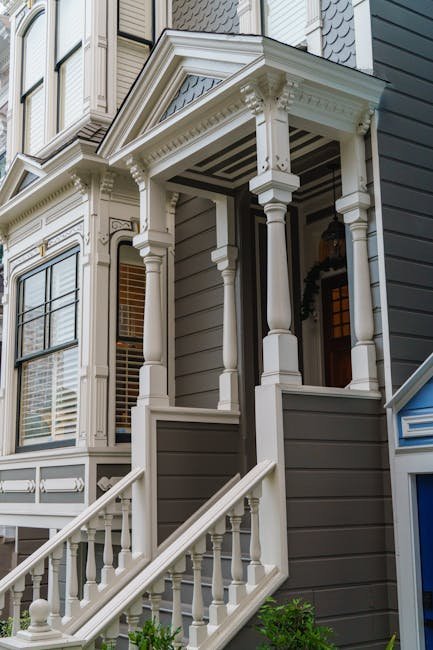
The Queen Anne style, despite its name, has nothing to do with the early 18th-century monarch. It represents the peak of Victorian residential design, characterized by asymmetrical facades, steeply pitched roofs with multiple gables, wraparound porches, corner towers, and a rich mixture of surface textures.
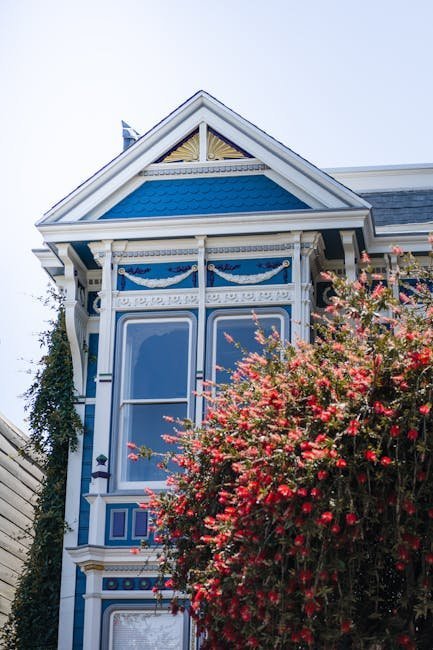
The distinctive fish-scale shingles, also called scalloped or imbricated shingles, are a Queen Anne trademark. They were applied in decorative patterns, often combined with brick, stone, clapboard, and half-timbering on a single facade. The effect is deliberately busy, celebrating the variety of materials available to the Victorian builder.
Queen Anne interiors are equally rich, with elaborate staircases, stained glass windows, built-in cabinetry, and ornate fireplace surrounds. Rooms are arranged en suite, allowing movement from one space to the next through wide doorways. The parlor, the most formal room, was designed for entertaining and displaying the family's finest possessions.
The Painted Ladies of San Francisco
The most famous Victorian houses in America are the Painted Ladies of San Francisco. These rows of colorful Queen Anne houses, built between 1890 and 1900, have become iconic images of the city. Their vivid paint schemes, using three or more colors to highlight architectural details, exemplify the Victorian love of color.
The houses survived the 1906 earthquake and fire, and the preservation movement of the 1960s and 1970s saved them from demolition. Today, the Painted Ladies are protected landmarks and among the most photographed buildings in San Francisco.
The tradition of painting Victorian houses in multiple colors, now known as the Painted Lady style, spread across the country. Cities like Cape May, New Jersey; Old Louisville, Kentucky; and the Garden District of New Orleans preserve entire neighborhoods of colorfully painted Victorian houses.
Interior Features & Living Spaces
Victorian house interiors reflect the social values of the era. Rooms were specialized for different activities and segregated by gender and class. The parlor was for formal entertaining, the sitting room for family use, the library for the gentleman, and the morning room for the lady of the house.
Technological innovations transformed the Victorian home. Gas lighting replaced candles and oil lamps. Indoor plumbing brought water to kitchens and bathrooms. Central heating, initially coal-fired, freed rooms from dependence on fireplaces. These advances made possible the compact, efficient house plans that would dominate the 20th century.
The kitchen, which had been a dangerous, dirty space in earlier eras, was transformed by cast-iron stoves, running water, and improved ventilation. The Victorian kitchen was still the domain of servants in wealthy households, but in middle-class homes it became the heart of family life.
"A Victorian house is a symphony in wood and glass, a composition of angles and curves that tells the story of a family's aspirations, its prosperity, and its place in the world."
The Victorian Era in Architecture
The Victorian era, spanning the reign of Queen Victoria from 1837 to 1901, produced some of the most visually exuberant houses ever built. The Industrial Revolution made possible the mass production of decorative elements, and Victorian homeowners embraced ornament with enthusiasm. No surface was left plain, no roofline left unadorned.
Victorian houses are not a single style but a family of related styles including Gothic Revival, Italianate, Stick, Queen Anne, and Shingle. What unites them is a love of variety, asymmetry, and picturesque composition. A Victorian house is meant to be looked at from every angle, with interesting details to discover around every corner.
The development of the balloon frame, a light wood framing system using mass-produced nails, made complex house forms affordable for the middle class. Combined with the expansion of railroads that brought building materials to every corner of the country, the balloon frame enabled the Victorian building boom.
Queen Anne: The Quintessential Victorian
The Queen Anne style, despite its name, has nothing to do with the early 18th-century monarch. It represents the peak of Victorian residential design, characterized by asymmetrical facades, steeply pitched roofs with multiple gables, wraparound porches, corner towers, and a rich mixture of surface textures.
The distinctive fish-scale shingles, also called scalloped or imbricated shingles, are a Queen Anne trademark. They were applied in decorative patterns, often combined with brick, stone, clapboard, and half-timbering on a single facade. The effect is deliberately busy, celebrating the variety of materials available to the Victorian builder.
Queen Anne interiors are equally rich, with elaborate staircases, stained glass windows, built-in cabinetry, and ornate fireplace surrounds. Rooms are arranged en suite, allowing movement from one space to the next through wide doorways. The parlor, the most formal room, was designed for entertaining and displaying the family's finest possessions.
The Painted Ladies of San Francisco
The most famous Victorian houses in America are the Painted Ladies of San Francisco. These rows of colorful Queen Anne houses, built between 1890 and 1900, have become iconic images of the city. Their vivid paint schemes, using three or more colors to highlight architectural details, exemplify the Victorian love of color.
The houses survived the 1906 earthquake and fire, and the preservation movement of the 1960s and 1970s saved them from demolition. Today, the Painted Ladies are protected landmarks and among the most photographed buildings in San Francisco.
The tradition of painting Victorian houses in multiple colors, now known as the Painted Lady style, spread across the country. Cities like Cape May, New Jersey; Old Louisville, Kentucky; and the Garden District of New Orleans preserve entire neighborhoods of colorfully painted Victorian houses.
Interior Features & Living Spaces
Victorian house interiors reflect the social values of the era. Rooms were specialized for different activities and segregated by gender and class. The parlor was for formal entertaining, the sitting room for family use, the library for the gentleman, and the morning room for the lady of the house.
Technological innovations transformed the Victorian home. Gas lighting replaced candles and oil lamps. Indoor plumbing brought water to kitchens and bathrooms. Central heating, initially coal-fired, freed rooms from dependence on fireplaces. These advances made possible the compact, efficient house plans that would dominate the 20th century.
The kitchen, which had been a dangerous, dirty space in earlier eras, was transformed by cast-iron stoves, running water, and improved ventilation. The Victorian kitchen was still the domain of servants in wealthy households, but in middle-class homes it became the heart of family life.
"A Victorian house is a symphony in wood and glass, a composition of angles and curves that tells the story of a family's aspirations, its prosperity, and its place in the world."
The Victorian House and the Industrial Age Home
The Victorian house emerged during a period of unprecedented social and technological change, reflecting the prosperity, confidence, and complex social codes of the industrial age. Named for Queen Victoria's reign (1837-1901), the Victorian architectural style is actually a family of related styles that evolved throughout the period, including Gothic Revival, Italianate, Second Empire, Queen Anne, and Stick style. Common to all Victorian houses is an emphasis on picturesque massing, elaborate ornament, and a proliferation of architectural features — bay windows, wraparound porches, turrets, gables, fish-scale shingles, and spindle work — that created houses of exuberant visual richness that celebrated their owners' prosperity and the manufacturing capabilities that made such ornament affordable.
The Victorian obsession with domestic propriety was encoded in elaborate room plans that separated family life into carefully graded zones of privacy and formality. The parlor, reserved for entertaining guests, was the most decorated room in the house, featuring the best furniture, heavy draperies, and elaborate wallpapers. The family sitting room or library offered more casual space for daily family activities, while the dining room staged the ritual of the family meal. Bedrooms were strictly separated by gender and age, with the master bedroom serving as a parental retreat and children's rooms, guest rooms, and servants' quarters occupying upper floors. This elaborate spatial hierarchy reflected Victorian social values and the separation of public and private life.
Technological innovation transformed the Victorian house in ways that previous generations could not have imagined. The spread of municipal gas and later electric lighting freed homes from the limitations of natural light and oil lamps, allowing more flexible room arrangements and evening social activities. Indoor plumbing, initially a luxury of the wealthy, gradually became standard, with bathrooms added to upper floors and kitchens equipped with sinks, stoves, and eventually refrigerators. Central heating, initially coal-fired and later oil or gas, liberated houses from the tyranny of individual fireplaces, allowing more open plans and eliminating the cold drafts that had plagued earlier houses. These technological advances fundamentally changed how families lived in their homes.
The American Victorian house developed distinctive regional characteristics, adapting the styles of the era to local climates, materials, and cultural preferences. New England's Victorian houses, built in wood with steeply pitched roofs, stand in contrast to San Francisco's iconic row houses with their ornate bay windows and the brick and brownstone Victorian townhouses of New York and Boston. The Southern Victorian house added wraparound verandas and high ceilings for cooling, while Midwestern Victorians embraced the prosperous solidity of Italianate and Second Empire styles. The American Queen Anne style, with its asymmetrical massing, multiple porch levels, and eclectic mix of surface textures, became the most exuberant expression of the Victorian spirit in the United States.
The legacy of Victorian architecture is complex, with the style falling dramatically out of fashion in the early twentieth century before experiencing a remarkable revival of appreciation. Modernist critics dismissed Victorian houses as fussy, over-decorated, and morally hypocritical, and thousands were demolished in urban renewal projects. Today, however, Victorian houses are among the most sought-after historic homes, commanding premium prices in cities like San Francisco, London, and Boston. Preservation movements have protected Victorian neighborhoods, and homeowners invest significantly in restoring original details, paint colors, and architectural features. The Victorian house's journey from despised relic to treasured heritage reflects changing tastes and a growing appreciation for the craftsmanship and character of the industrial age home.
Victorian architecture encompasses diverse styles united by love of ornament and expressive individuality. Gothic Revival featured pointed arches and steep roofs. Italianate emphasized wide eaves and tall windows. Queen Anne style combined asymmetrical facades with varied textures, wrap-around porches, and turrets. The Industrial Revolution made mass-produced decorative elements possible, fueling the creativity of this period.
The Victorian house was made possible by the technological advances of the Industrial Revolution. Machine-cut wood trim, known as gingerbread, could be produced cheaply and in unlimited quantities, allowing homeowners to decorate their houses with elaborate scrollwork and brackets that would have been prohibitively expensive if hand-carved. Mass-produced nails replaced hand-forged nails, dramatically reducing construction costs. Factory-made windows, doors, and other building components standardized construction and made houses more affordable. The expansion of the railroad network made it possible to ship building materials across the country, reducing regional differences in construction and allowing the latest architectural fashions to spread quickly from the East Coast to the frontier.
Perhaps the most distinctive feature of the Victorian house is its use of color. Before the Victorian era, houses were typically painted white or left unpainted. Victorian homeowners embraced color with enthusiasm, painting their houses in elaborate polychrome schemes that emphasized architectural details. The introduction of commercial paint manufacturing in the mid-19th century made a vast range of colors available at affordable prices. Paint catalogs offered suggested color schemes for different architectural styles, with body colors, trim colors, and accent colors carefully coordinated. The historic paint colors of the Victorian era, including deep reds, olive greens, ochres, and browns, have been documented by paint companies and are still available today. The Victorian love of color extended to the interior, where wallpapers, painted ceilings, and stenciled decorations created rich, atmospheric interiors that reflected the Victorian taste for visual complexity and expressive individuality.
Further Reading
Learn more about Victorian architecture on Wikipedia and explore broader Western architecture traditions.