A Monument to Progress
The Eiffel Tower was built for the 1889 Exposition Universelle (World's Fair) to celebrate the 100th anniversary of the French Revolution. It was designed by Gustave Eiffel's engineering company, with senior engineers Maurice Koechlin and Emile Nouguier, and architect Stephen Sauvestre.
At 300 meters (984 feet), it was the tallest structure in the world until the Chrysler Building in 1930. The tower's height was unprecedented, and the engineering challenges were immense: wind resistance, thermal expansion, and the need for elevators that could climb at a steep angle.
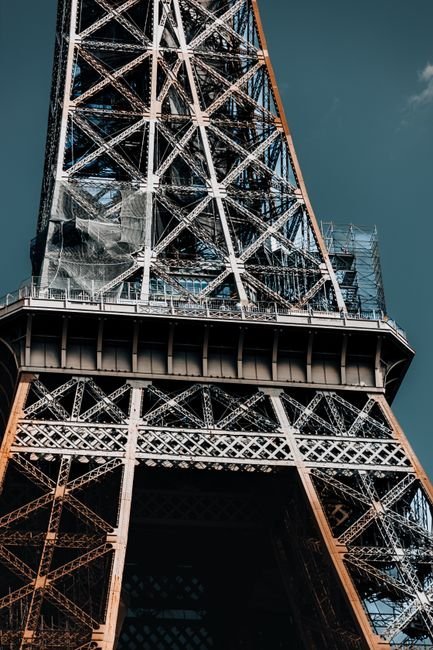
The tower was assembled from 18,038 individual iron pieces, held together by 2.5 million rivets. Construction took just two years, two months, and five days, an astonishing feat of prefabrication and project management. The iron lattice structure was designed to minimize wind resistance, and the tower sways only 6-7 centimeters in high winds.
Controversy & Acceptance
The Eiffel Tower was deeply controversial when built. A group of prominent artists and intellectuals, including Guy de Maupassant, Emile Zola, and Alexandre Dumas fils, published a protest letter calling the tower a 'useless and monstrous' eyesore that would disfigure Paris.
Maupassant reportedly ate lunch in the tower's restaurant every day because it was the only place in Paris where he could not see the tower. Despite the criticism, the tower was an immediate popular success, attracting nearly two million visitors during the 1889 Exposition.
The tower was originally intended to be temporary, with a permit to stand for 20 years. It was saved by its usefulness as a radio antenna. Eiffel installed a meteorological laboratory and a wireless telegraph station in the tower. During World War I, the tower's radio transmissions intercepted enemy communications.
Design & Structure
The tower's graceful curve is not merely aesthetic but mathematical. Eiffel designed the tower's profile to be a precise exponential curve that minimizes wind resistance. The formula ensures that the tower can withstand wind pressures that would topple a straight-sided structure of the same height.
The tower has three levels accessible to visitors. The first level (57 meters) contains the 58 Tour Eiffel restaurant and a glass floor. The second level (115 meters) has the Michelin-starred Le Jules Verne restaurant and the best views of Paris landmarks. The top level (276 meters) offers panoramic views extending up to 60 kilometers on a clear day.
The tower is repainted every seven years using 60 tons of paint specially formulated to protect the iron structure. The paint color has changed over time: from reddish-brown to yellow-ochre to the current bronze 'Eiffel Tower Brown,' chosen to complement the Parisian skyline.
The Tower Today
The Eiffel Tower is the most visited paid monument in the world, with nearly 7 million visitors annually. It has become the symbol of Paris and one of the most recognizable structures on earth. The tower appears in countless films, photographs, and artworks.
The tower has been the site of many remarkable events. In 1912, Franz Reichelt died testing his parachute from the first level. In 1923, Pierre Labric rode a bicycle down from the first level. The tower has been a giant billboard (for Citroen in the 1920s-30s), a Christmas tree, and a canvas for light shows.
Since 2000, the tower has been illuminated by 20,000 twinkling lights for five minutes every hour after dark. The sparkling lights, along with the golden floodlighting, make the tower a nightly spectacle that reinforces its place as the luminous heart of Paris.
"The Eiffel Tower is the only structure in the world that is beautiful precisely because it is useless. It stands, pure and unapologetic, as a monument to the audacity of human ambition."
A Monument to Progress
The Eiffel Tower was built for the 1889 Exposition Universelle (World's Fair) to celebrate the 100th anniversary of the French Revolution. It was designed by Gustave Eiffel's engineering company, with senior engineers Maurice Koechlin and Emile Nouguier, and architect Stephen Sauvestre.
At 300 meters (984 feet), it was the tallest structure in the world until the Chrysler Building in 1930. The tower's height was unprecedented, and the engineering challenges were immense: wind resistance, thermal expansion, and the need for elevators that could climb at a steep angle.
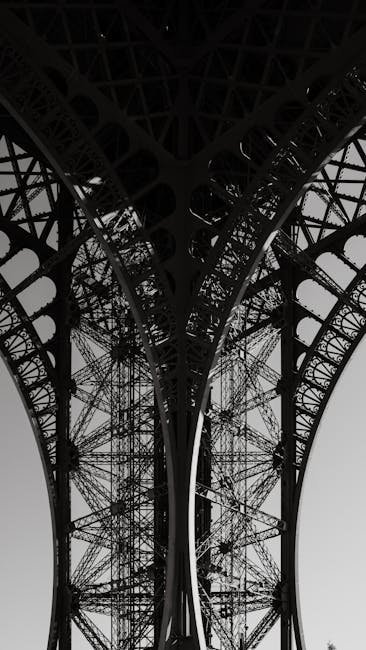
The tower was assembled from 18,038 individual iron pieces, held together by 2.5 million rivets. Construction took just two years, two months, and five days, an astonishing feat of prefabrication and project management. The iron lattice structure was designed to minimize wind resistance, and the tower sways only 6-7 centimeters in high winds.
Controversy & Acceptance
The Eiffel Tower was deeply controversial when built. A group of prominent artists and intellectuals, including Guy de Maupassant, Emile Zola, and Alexandre Dumas fils, published a protest letter calling the tower a 'useless and monstrous' eyesore that would disfigure Paris.
Maupassant reportedly ate lunch in the tower's restaurant every day because it was the only place in Paris where he could not see the tower. Despite the criticism, the tower was an immediate popular success, attracting nearly two million visitors during the 1889 Exposition.
The tower was originally intended to be temporary, with a permit to stand for 20 years. It was saved by its usefulness as a radio antenna. Eiffel installed a meteorological laboratory and a wireless telegraph station in the tower. During World War I, the tower's radio transmissions intercepted enemy communications.
Design & Structure
The tower's graceful curve is not merely aesthetic but mathematical. Eiffel designed the tower's profile to be a precise exponential curve that minimizes wind resistance. The formula ensures that the tower can withstand wind pressures that would topple a straight-sided structure of the same height.
The tower has three levels accessible to visitors. The first level (57 meters) contains the 58 Tour Eiffel restaurant and a glass floor. The second level (115 meters) has the Michelin-starred Le Jules Verne restaurant and the best views of Paris landmarks. The top level (276 meters) offers panoramic views extending up to 60 kilometers on a clear day.
The tower is repainted every seven years using 60 tons of paint specially formulated to protect the iron structure. The paint color has changed over time: from reddish-brown to yellow-ochre to the current bronze 'Eiffel Tower Brown,' chosen to complement the Parisian skyline.
The Tower Today
The Eiffel Tower is the most visited paid monument in the world, with nearly 7 million visitors annually. It has become the symbol of Paris and one of the most recognizable structures on earth. The tower appears in countless films, photographs, and artworks.
The tower has been the site of many remarkable events. In 1912, Franz Reichelt died testing his parachute from the first level. In 1923, Pierre Labric rode a bicycle down from the first level. The tower has been a giant billboard (for Citroen in the 1920s-30s), a Christmas tree, and a canvas for light shows.
Since 2000, the tower has been illuminated by 20,000 twinkling lights for five minutes every hour after dark. The sparkling lights, along with the golden floodlighting, make the tower a nightly spectacle that reinforces its place as the luminous heart of Paris.
"The Eiffel Tower is the only structure in the world that is beautiful precisely because it is useless. It stands, pure and unapologetic, as a monument to the audacity of human ambition."
Controversy and Construction of the Eiffel Tower
The Eiffel Tower's construction was preceded by intense public controversy that nearly prevented its creation. When Gustave Eiffel's design was selected as the centerpiece of the 1889 Exposition Universelle, France's leading artists and intellectuals — including writers Guy de Maupassant and Alexandre Dumas fils, and composer Charles Gounod — published a passionate protest in the newspaper Le Temps, calling the tower a 'hateful column of bolted metal' that would 'dishonor Paris.' Despite this opposition, construction proceeded, and the tower was completed in just over two years — a remarkably fast timeline for a structure of its height. The controversy quickly faded once the tower was built and the public could experience its unprecedented views.
The engineering of the Eiffel Tower represented a quantum leap in metal construction, with over 18,000 individual iron pieces assembled using 2.5 million rivets. Each piece was specially designed and prefabricated in Eiffel's factory in Levallois-Perret, then transported to the construction site where they were assembled with extraordinary precision. The tower's distinctive shape, which flares outward at the base, was not merely aesthetic but scientifically determined to resist wind forces — Eiffel, a master of aerodynamics, designed the curvature so that the tower could withstand even the strongest gales. The famous lattice structure, while visually elegant, serves a practical purpose by allowing wind to pass through rather than striking a solid surface.
The tower's elevators were among the most complex ever built at the time, designed by the American company Otis to travel up the tower's curved legs at a steep angle that changed throughout the ascent. The double-decker elevators, with their distinctive rounded shapes that follow the curve of the tower's legs, are themselves engineering marvels that have been carefully preserved and upgraded over the years. Five elevators serve the tower's three levels, covering a vertical rise of 300 meters. For visitors willing to make the effort, 1,665 steps lead from the ground to the top — a climb that several hundred thousand people undertake each year as a personal challenge.
The Eiffel Tower's relationship with science and technology has been integral to its identity from the very beginning. Gustave Eiffel installed a meteorological laboratory and a wind tunnel on the tower, conducting experiments that advanced the understanding of aerodynamics and meteorology. The tower served as a platform for early radio transmission experiments, with Eiffel himself funding the installation of radio equipment that would prove crucial for military communications during World War I. Today, the tower bristles with antennas for radio and television broadcasting, and its summit houses a weather station and telecommunications equipment that serve millions of Parisians. This scientific legacy is often overlooked by visitors who see only the tower's romantic silhouette, but it was central to Eiffel's original vision.
The Eiffel Tower's maintenance and preservation require continuous attention, with repainting cycles that have occurred every seven years since its construction. Each repainting requires 60 tons of paint applied by hand, using a special three-shade gradient that appears uniform from a distance but allows the tower to appear equally colored against both bright sky and darker urban backdrops. The painting process is perilous — painters work without scaffolding, suspended on ropes and platforms at heights exceeding 300 meters. The tower's color has changed over its history, from reddish-brown to yellow-ochre to the distinctive bronze known as Eiffel Tower Brown used today. Each repainting costs approximately four million euros and takes over eighteen months to complete.
The Eiffel Tower was built for the 1889 Exposition Universelle, celebrating the centennial of the French Revolution. Gustave Eiffel design demonstrated the capabilities of modern iron construction. The 18,038 individual pieces were prefabricated and assembled using over 2.5 million rivets. Despite apparent fragility, the tower is extraordinarily resistant to wind, swaying only about 9 centimeters in the strongest winds. Originally intended to stand for only 20 years, it was saved by its value as a radio transmission tower.
The Eiffel Tower has played a significant role in scientific and technological history beyond its function as a tourist attraction. Gustave Eiffel, an accomplished engineer who had built railway bridges and the internal structure of the Statue of Liberty, designed the tower to serve as a laboratory for meteorological and aerodynamic research. He installed a meteorological laboratory on the third level and conducted experiments on wind resistance and the behavior of falling objects. The tower was also used for early radio transmission experiments, and it was the radio antenna that saved the tower from demolition when its original 20-year permit expired. Eiffel encouraged scientific use of the tower, and it has been used for radio and television broadcasting, weather observation, and military communications throughout its history.
The Eiffel Tower underwent a major renovation in the 1980s that modernized its facilities while preserving its historic character. The second-level restaurant was redesigned, new observation decks were added, and the lighting system was upgraded. The tower now features a sparkling light show every hour after dark, with 20,000 light bulbs illuminating the structure. The Eiffel Tower is the most-visited paid monument in the world, with nearly 7 million visitors annually. Despite its initial controversy, the tower has become the most powerful symbol of Paris and France, recognized universally as an icon of romance, engineering, and French culture. Its image appears in countless films, photographs, and artworks, and it continues to inspire architects and engineers to push the boundaries of what is possible in metal construction.
Further Reading
Learn more about the Eiffel Tower on Wikipedia and explore broader Western architecture traditions.