The Fairytale King
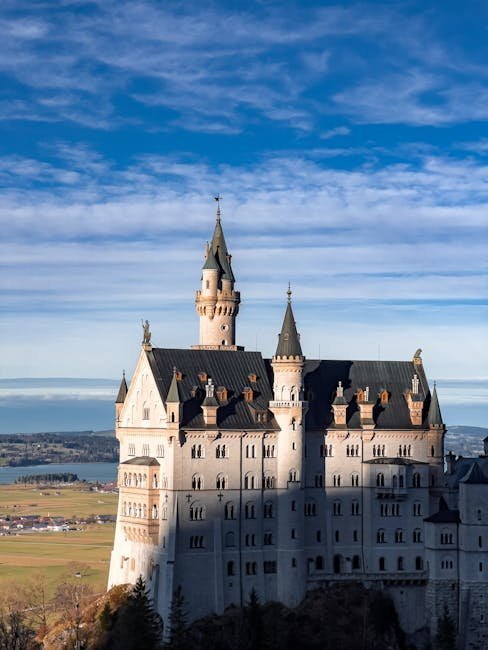
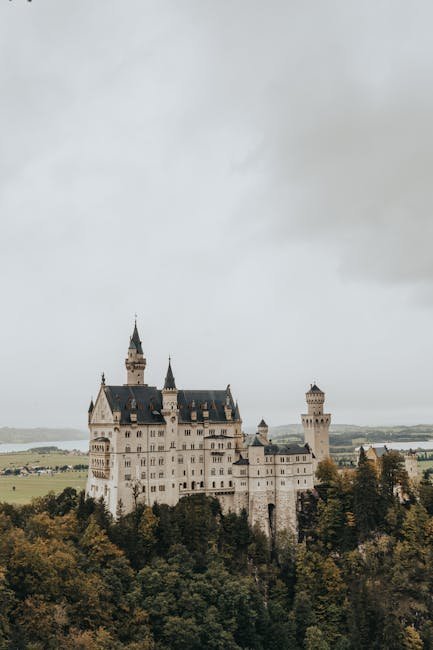
Neuschwanstein Castle sits dramatically on a rugged hilltop in the Bavarian Alps near Fussen, Germany. It was built by King Ludwig II of Bavaria, a reclusive monarch who preferred fantasy to politics. Ludwig used his personal fortune to construct a series of extravagant castles, of which Neuschwanstein is the most famous.
Unlike medieval castles built for defense, Neuschwanstein was conceived as a stage set for Wagnerian opera. Ludwig was an obsessive admirer of composer Richard Wagner, and the castle's interiors are decorated with scenes from Wagner's operas. The Throne Hall, which was never completed, was designed as a Grail hall inspired by Parsifal.
Ludwig's building projects bankrupted him personally and led to his being declared insane in 1886. He died under mysterious circumstances just days after being deposed. Neuschwanstein was opened to the public shortly after his death and has since become one of the most visited castles in Europe.
Architecture of Romance
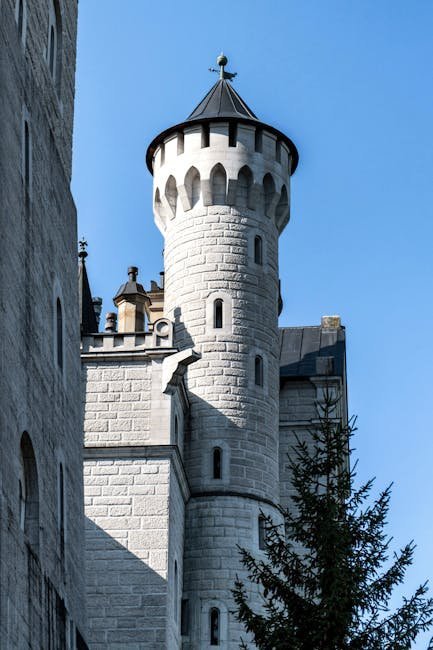
Neuschwanstein was designed by Christian Jank, a theatrical set designer rather than an architect, which explains its dramatic, stage-like quality. The style is Romanesque Revival with Byzantine and Gothic elements freely mixed. The silhouette, with its pointed towers, balconies, and ornate facade, was designed to be picturesque rather than historically accurate.
The castle's location was chosen for dramatic effect. It perches on a narrow rock spur 200 meters above the valley below. The setting, with the Alps rising behind and two lakes visible in the distance, is integral to the castle's romantic impact. Ludwig wanted to create a medieval knight's castle that matched his idealized vision of the past.
The interior is equally theatrical. The Singer's Hall was modeled on the hall in Wartburg Castle where medieval minstrels competed. The Throne Hall combines Byzantine and Romanesque elements with a massive chandelier weighing 900 kilograms. Ludwig's bedroom is decorated in the Gothic style with elaborate woodcarvings that took 14 carpenters four years to complete.
Disney Inspiration & Popular Culture
Neuschwanstein's impact on global popular culture is immense. Walt Disney visited the castle in the 1950s and used it as the direct inspiration for the Sleeping Beauty Castle at Disneyland. The castle has since appeared in countless films, television shows, and video games as the quintessential image of a fairytale castle.
The castle receives over 1.4 million visitors annually, with up to 6,000 per day in peak season. Its popularity has created significant preservation challenges. The fragile 19th-century interiors, never designed for mass tourism, require constant maintenance. Access is by guided tour only, and photography inside is prohibited to protect the furnishings.
Despite its medieval appearance, Neuschwanstein was remarkably modern for its time. It had central heating, running water on all floors, automatic flushing toilets, and a sophisticated bell system to summon servants from any room. These modern amenities were hidden behind medieval-style panels and fixtures.
Visiting Neuschwanstein
The best time to visit is in late spring or early autumn when the weather is pleasant and crowds are smaller. Tickets should be booked online well in advance, especially during summer. The tour of the castle takes about 35 minutes and covers 15 rooms.
The walk from the village of Hohenschwangau up to the castle takes about 30-40 minutes. A horse-drawn carriage and a shuttle bus are also available. The Marienbrucke (Mary's Bridge), a narrow pedestrian bridge spanning the Pollat Gorge behind the castle, offers the most famous photo opportunity.
For the full experience, combine a visit to Neuschwanstein with a tour of Hohenschwangau Castle (Ludwig's childhood home) and the Museum of the Bavarian Kings in the village below. The surrounding area offers excellent hiking trails with views of both castles.
"The location of Neuschwanstein is one of the most beautiful that can be imagined, and the castle itself will be a magnificent and awe-inspiring monument to the romantic spirit of the German people."
Further Reading
Learn more about Neuschwanstein Castle on Wikipedia and explore broader Western architecture traditions.
Ludwig II and the Politics of Castle Building
King Ludwig II of Bavaria was a romantic idealist who used architecture as an escape from political reality. His castles were not military fortifications but theatrical stage sets designed to recreate the medieval world of Germanic legend. Neuschwanstein, constructed between 1869 and 1886, was inspired by the operas of Richard Wagner, particularly Lohengrin and Tannhauser. The castle's settings, with its Singers' Hall and Throne Room, were designed as three-dimensional embodiments of Wagnerian drama.
The political context of Ludwig's castle building is essential to understanding his motivation. By the 1860s, Bavaria had been absorbed into the Prussian-dominated German Empire, and Ludwig had lost most of his political power. Rather than exercise power in the real political world, he created a fantasy realm where he could rule as an absolute monarch. The castles, funded from his personal fortune, were a form of political protest through architectural escapism.
Neuschwanstein's construction was technologically advanced for its time. Despite its medieval appearance, the castle had central heating, running water, electric lights, and a telephone system. The kitchens were equipped with modern appliances, and the castle was designed with service corridors and utilities hidden from view. This combination of romantic appearance and modern technology makes Neuschwanstein a quintessentially 19th-century building, more modern in its infrastructure than many contemporary buildings of its time.
The Fairytale King
Neuschwanstein Castle sits dramatically on a rugged hilltop in the Bavarian Alps near Fussen, Germany. It was built by King Ludwig II of Bavaria, a reclusive monarch who preferred fantasy to politics. Ludwig used his personal fortune to construct a series of extravagant castles, of which Neuschwanstein is the most famous.
Unlike medieval castles built for defense, Neuschwanstein was conceived as a stage set for Wagnerian opera. Ludwig was an obsessive admirer of composer Richard Wagner, and the castle's interiors are decorated with scenes from Wagner's operas. The Throne Hall, which was never completed, was designed as a Grail hall inspired by Parsifal.
Ludwig's building projects bankrupted him personally and led to his being declared insane in 1886. He died under mysterious circumstances just days after being deposed. Neuschwanstein was opened to the public shortly after his death and has since become one of the most visited castles in Europe.
Architecture of Romance
Neuschwanstein was designed by Christian Jank, a theatrical set designer rather than an architect, which explains its dramatic, stage-like quality. The style is Romanesque Revival with Byzantine and Gothic elements freely mixed. The silhouette, with its pointed towers, balconies, and ornate facade, was designed to be picturesque rather than historically accurate.
The castle's location was chosen for dramatic effect. It perches on a narrow rock spur 200 meters above the valley below. The setting, with the Alps rising behind and two lakes visible in the distance, is integral to the castle's romantic impact. Ludwig wanted to create a medieval knight's castle that matched his idealized vision of the past.
The interior is equally theatrical. The Singer's Hall was modeled on the hall in Wartburg Castle where medieval minstrels competed. The Throne Hall combines Byzantine and Romanesque elements with a massive chandelier weighing 900 kilograms. Ludwig's bedroom is decorated in the Gothic style with elaborate woodcarvings that took 14 carpenters four years to complete.
Disney Inspiration & Popular Culture
Neuschwanstein's impact on global popular culture is immense. Walt Disney visited the castle in the 1950s and used it as the direct inspiration for the Sleeping Beauty Castle at Disneyland. The castle has since appeared in countless films, television shows, and video games as the quintessential image of a fairytale castle.
The castle receives over 1.4 million visitors annually, with up to 6,000 per day in peak season. Its popularity has created significant preservation challenges. The fragile 19th-century interiors, never designed for mass tourism, require constant maintenance. Access is by guided tour only, and photography inside is prohibited to protect the furnishings.
Despite its medieval appearance, Neuschwanstein was remarkably modern for its time. It had central heating, running water on all floors, automatic flushing toilets, and a sophisticated bell system to summon servants from any room. These modern amenities were hidden behind medieval-style panels and fixtures.
Visiting Neuschwanstein
The best time to visit is in late spring or early autumn when the weather is pleasant and crowds are smaller. Tickets should be booked online well in advance, especially during summer. The tour of the castle takes about 35 minutes and covers 15 rooms.
The walk from the village of Hohenschwangau up to the castle takes about 30-40 minutes. A horse-drawn carriage and a shuttle bus are also available. The Marienbrucke (Mary's Bridge), a narrow pedestrian bridge spanning the Pollat Gorge behind the castle, offers the most famous photo opportunity.
For the full experience, combine a visit to Neuschwanstein with a tour of Hohenschwangau Castle (Ludwig's childhood home) and the Museum of the Bavarian Kings in the village below. The surrounding area offers excellent hiking trails with views of both castles.
"The location of Neuschwanstein is one of the most beautiful that can be imagined, and the castle itself will be a magnificent and awe-inspiring monument to the romantic spirit of the German people."
Ludwig II and the Politics of Castle Building
King Ludwig II of Bavaria was a romantic idealist who used architecture as an escape from political reality. His castles were not military fortifications but theatrical stage sets designed to recreate the medieval world of Germanic legend. Neuschwanstein, constructed between 1869 and 1886, was inspired by the operas of Richard Wagner, particularly Lohengrin and Tannhauser. The castle's settings, with its Singers' Hall and Throne Room, were designed as three-dimensional embodiments of Wagnerian drama.
The political context of Ludwig's castle building is essential to understanding his motivation. By the 1860s, Bavaria had been absorbed into the Prussian-dominated German Empire, and Ludwig had lost most of his political power. Rather than exercise power in the real political world, he created a fantasy realm where he could rule as an absolute monarch. The castles, funded from his personal fortune, were a form of political protest through architectural escapism.
Neuschwanstein's construction was technologically advanced for its time. Despite its medieval appearance, the castle had central heating, running water, electric lights, and a telephone system. The kitchens were equipped with modern appliances, and the castle was designed with service corridors and utilities hidden from view. This combination of romantic appearance and modern technology makes Neuschwanstein a quintessentially 19th-century building, more modern in its infrastructure than many contemporary buildings of its time.
King Ludwig II and the Dream of Neuschwanstein
Neuschwanstein Castle is inseparable from the tragic and romantic figure of King Ludwig II of Bavaria, who commissioned the castle as a personal retreat and homage to the operas of Richard Wagner. Ludwig, often called the Fairy Tale King, was a deeply private and idealistic monarch who found the realities of nineteenth-century politics unbearable. His fascination with medieval chivalry and German mythology drove him to create a series of fantastical castles, with Neuschwanstein being the most ambitious. The castle was designed not as a traditional royal residence but as a stage set for living out his dreams, with every room themed after characters and scenes from Wagner's operas such as Tannhauser, Lohengrin, and Parsifal.
The interior decoration of Neuschwanstein is a breathtaking fusion of medieval fantasy and nineteenth-century technology. The Singer's Hall, inspired by the Hall of the Minstrels at Wartburg Castle, features wall paintings depicting scenes from the legend of Parsifal, while the Throne Hall combines Byzantine splendor with Germanic motifs in a two-story chamber designed to evoke the Holy Grail's temple. Despite this medieval aesthetic, the castle incorporated advanced technology for its time, including central heating, running water, electric bells for summoning servants, and telephones. This juxtaposition of ancient fantasy and modern convenience encapsulates the Romantic era's paradoxical yearning for a past that never truly existed.
Ludwig's obsession with Neuschwanstein ultimately contributed to his downfall. The castle's construction consumed vast sums of the royal treasury, driving Bavaria to the brink of financial crisis. In 1886, Ludwig was declared mentally unfit to rule — a diagnosis widely believed to have been politically motivated — and was deposed. Just days later, he died under mysterious circumstances in Lake Starnberg. Neuschwanstein was never completed; only fourteen rooms were finished before his death. Yet this unfinished dream became the world's most famous castle, inspiring Disney's Sleeping Beauty Castle and drawing over 1.4 million visitors annually. Ludwig's retreat from reality became a global icon of fantasy architecture.
Neuschwanstein Castle is the quintessential fairy-tale castle, inspiring the Disney Sleeping Beauty Castle and countless other romantic fantasies. Commissioned by Ludwig II of Bavaria in 1869, the castle was designed by a theatrical set designer rather than a traditional architect. This theatrical origin is evident in the dramatic silhouette and picturesque siting.
The interior is as fantastical as the exterior, with rooms dedicated to Richard Wagner operas. The Singers Hall, modeled on the hall of Wartburg Castle, features murals depicting scenes from the Holy Grail legend. Ludwig II lived in the castle for only 172 days before his death in 1886. The castle was opened to the public weeks later and has become one of Germany most famous tourist destinations.
Ludwig II built Neuschwanstein as a personal retreat and homage to the Germanic legends that he so admired, particularly the operas of Richard Wagner. The king was an eccentric and increasingly reclusive figure who poured his personal fortune into ambitious building projects. Neuschwanstein was only one of several castles he commissioned, including Herrenchiemsee, a copy of Versailles, and Linderhof, an ornate rococo palace. These projects, combined with the kings refusal to participate in the governance of Bavaria, led to him being declared mentally unfit to rule in 1886. He was removed from power and died under mysterious circumstances in Lake Starnberg just days later.
Despite the kings tragic end, Neuschwanstein survived and flourished as a tourist attraction. The castle receives over 1.3 million visitors annually, with up to 6,000 visitors per day during peak summer months. The interior, while incomplete (only 14 rooms were finished before Ludwigs death), is lavishly decorated. The Throne Hall, designed in the Byzantine style, features a massive chandelier weighing 900 kilograms and a mosaic floor depicting animals and plants. The Singers Hall, the largest room in the castle, was designed for concerts but was never used during Ludwigs lifetime. Today it hosts regular classical concerts during the summer months, realizing the kings vision of a palace dedicated to the arts.