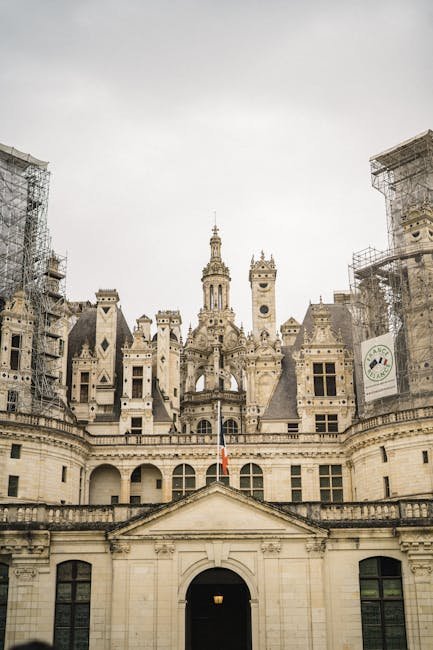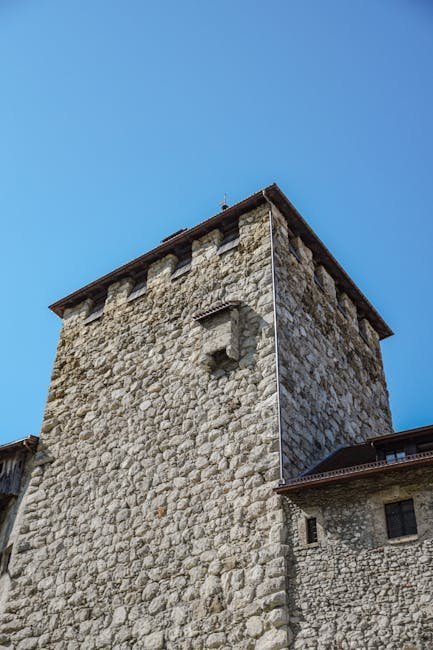
Gothic architecture emerged in the Ile-de-France region during the mid-12th century and dominated European building for over 400 years. While most famously associated with cathedrals, Gothic principles were extensively applied to castle and palace construction, creating some of the most visually striking fortresses in the world.
The Birth of the Gothic Style
The style's defining innovation was the pointed arch, which distributed weight far more efficiently than the rounded Romanesque arch that preceded it. This seemingly simple geometric change had profound structural consequences: walls could be thinner, windows could be larger, and ceilings could soar to heights that had not been achieved since the fall of the Roman Empire. The pointed arch is not merely an aesthetic choice — it is a load-bearing strategy that channels the weight of the vaulted ceiling downward along a steeper vector, requiring less lateral buttressing than a semicircular arch of the same span.
In castle architecture, pointed arches appear everywhere: in grand entrance portals, in window tracery, in arcaded galleries, and in the great ceremonial halls where feudal lords held court. The Chateau de Pierrefonds, rebuilt by Viollet-le-Duc in the 19th century, demonstrates the pointed arch in a purely military context — its gatehouse arches are simultaneously defensive and elegant, proving that fortification and beauty are not mutually exclusive.
Further Reading
Learn more about Gothic architecture on Wikipedia and explore broader Western architecture traditions.
Flying Buttresses & Rib Vaults
Flying buttresses are perhaps the most visually dramatic Gothic innovation. These external stone arches transfer the outward thrust of the roof and upper walls to massive vertical piers outside the building, effectively decoupling the structural support from the interior wall. This system allowed medieval masons to open up the walls with enormous windows — a radical departure from the thick, dark-walled Romanesque fortresses that preceded Gothic construction.
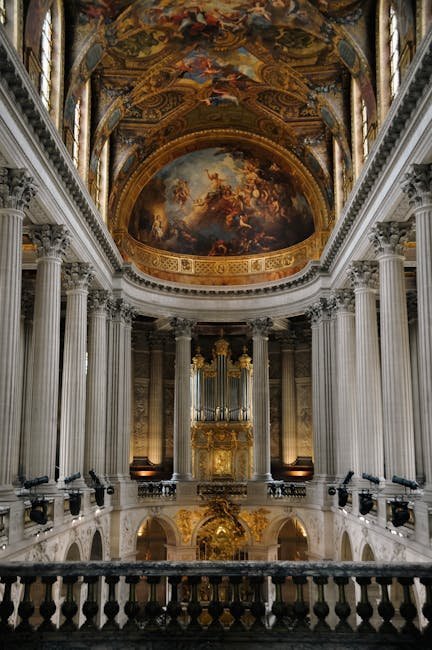
In castle chapels and great halls, flying buttresses appear in more restrained form than in cathedrals, but their function is identical. The Sainte-Chapelle in Paris, built as a royal chapel within the medieval Palais de la Cite, reduces the wall surface between buttresses to near-zero — the entire upper chapel is essentially a cage of stone holding panels of stained glass. While Sainte-Chapelle is a chapel rather than a castle proper, its construction techniques directly influenced noble castle chapels across France.
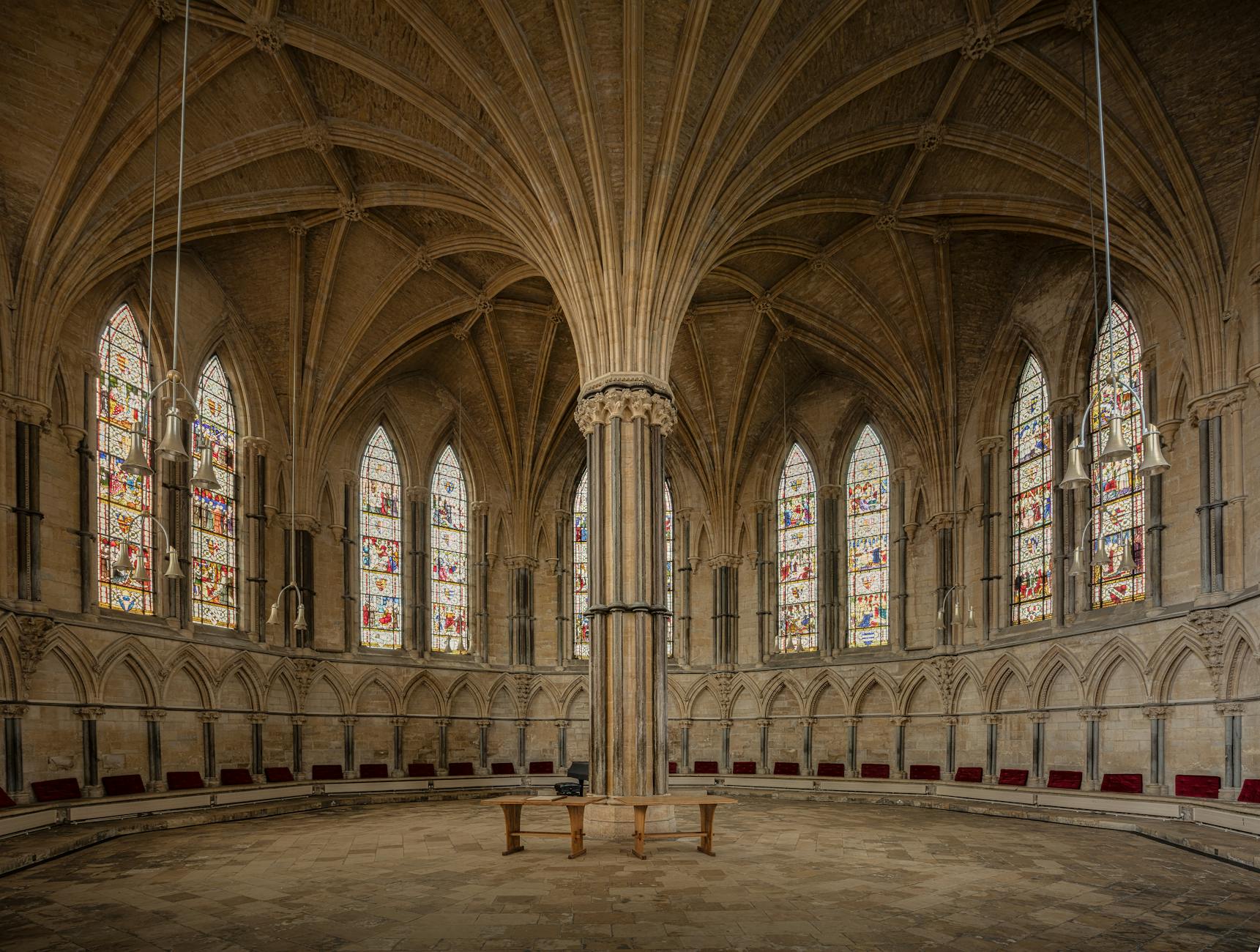
The related innovation of rib vaulting replaced the heavy barrel vaults of Romanesque buildings with a skeletal framework of intersecting stone ribs. The spaces between ribs could be filled with much lighter masonry, reducing overall weight by as much as 30% compared to a continuous barrel vault of the same span. The ribs themselves became decorative features — master masons competed to produce ever more complex rib patterns, culminating in the fan vaults of English Perpendicular Gothic and the net vaults of German Sondergotik.
Rose Windows & Stained Glass
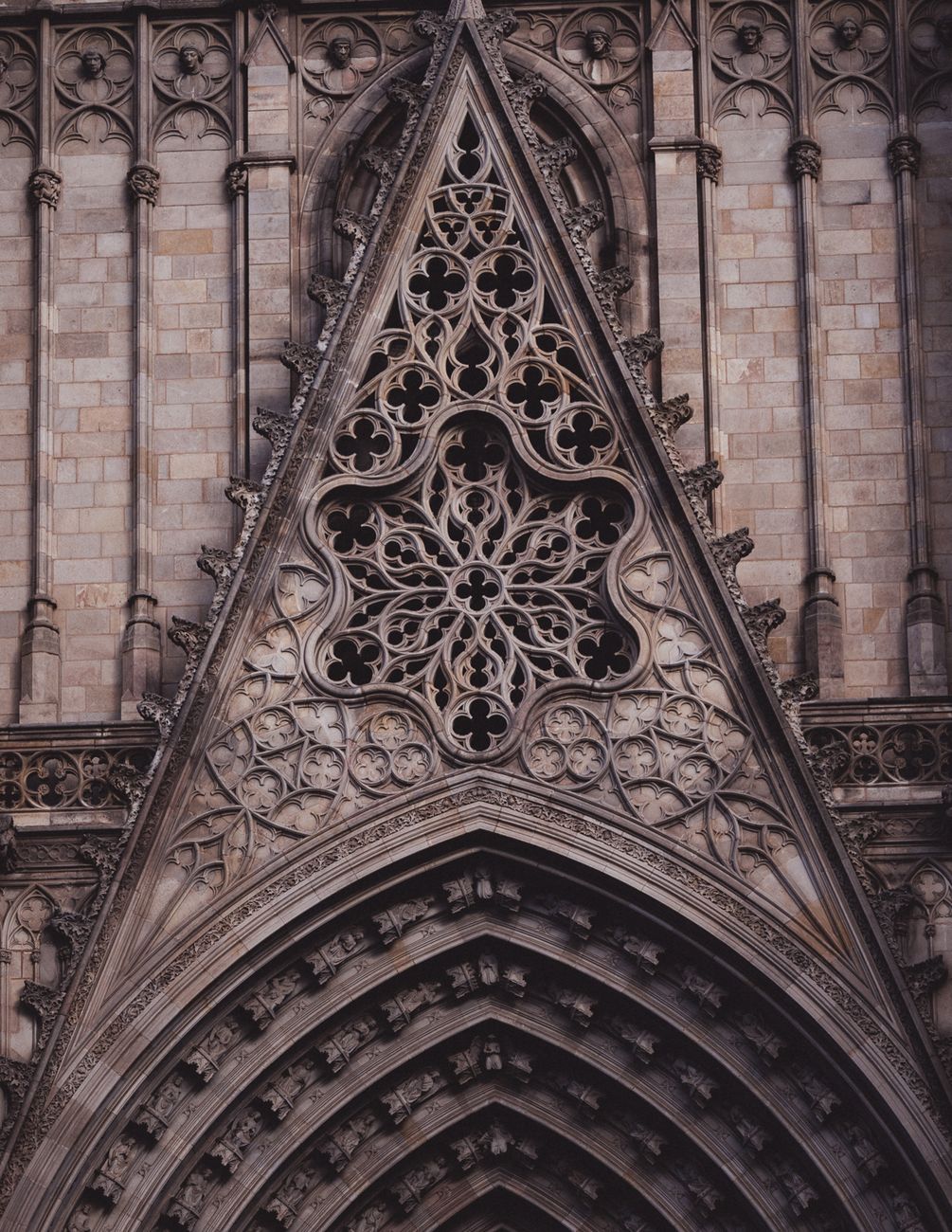
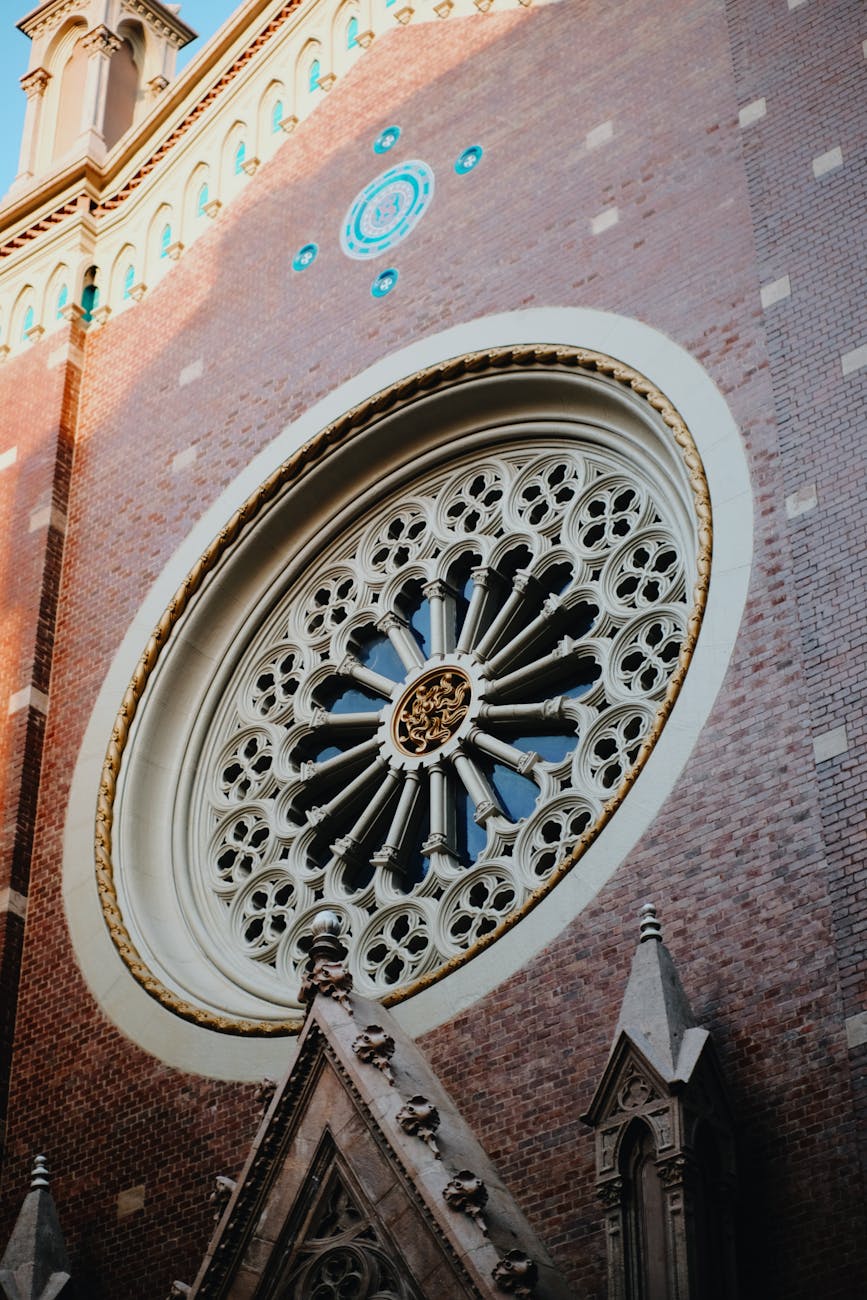
The rose window, with its intricate radial tracery centered on a circular oculus, represents the Gothic mastery of geometry and the medieval understanding of light as a manifestation of divine order. These circular windows became the defining centerpiece of major facade compositions, their colored glass panels depicting biblical narratives, saints' lives, and cosmological diagrams for a largely illiterate medieval audience.
In castle and palace chapels, smaller-scale rose windows and lancet windows brought the same luminous beauty to royal and aristocratic settings. The play of colored light across stone interiors — reds, deep blues, emerald greens, and golds — created an atmosphere that medieval theologians described as the lux nova, or "new light," a foretaste of the heavenly Jerusalem described in the Book of Revelation.
The survival of medieval stained glass in sites like Sainte-Chapelle, Chartres Cathedral, and York Minster reveals the extraordinary technical sophistication of medieval glaziers. Each color required a different metallic oxide additive: cobalt for blue, copper for red, iron for green, manganese for purple. The glass was blown into cylinders, flattened while hot, cut to shape with a hot iron, and assembled with lead cames — a process that has changed remarkably little in eight centuries.
Decorative Elements & Symbolism
Gothic castles are adorned with a rich vocabulary of carved stone ornament. Crockets — leaf-shaped projections curling outward from spires and pinnacles — echo the natural world in stone. Finials cap every vertical element with ornamental flourishes, often taking the form of fleur-de-lis, crosses, or heraldic beasts. The famous gargoyles and grotesques that project from parapets serve the practical function of water spouts, directing rainwater away from masonry walls, while their monstrous forms were believed to ward off evil spirits from the sacred spaces within.
Heraldic carving reached its zenith in Gothic castle decoration. Coats of arms were carved above gateways, painted on great hall ceilings, and woven into tapestries that covered stone walls. Every element of Gothic decoration carried meaning — the oak leaf for strength, the vine for continuity of lineage, the griffin for martial valor. A Gothic castle was legible to its medieval inhabitants in ways that are largely lost to modern visitors without specialized knowledge.
"The Gothic cathedral is a Bible in stone, its scriptures written in light and shadow, its lessons told in every arch and spire — a language older than words, speaking directly to the soul through proportion and radiance."
Notable Gothic Castles Across Europe
France's Loire Valley contains several remarkable castles with significant Gothic elements. The Chateau de Blois incorporates a Gothic wing built under Louis XII that features arcaded galleries and ornate dormer windows. The Palais des Papes in Avignon — part fortress, part palace, part monastery — represents Gothic architecture at its most monumental and austere, with walls up to five meters thick and vast vaulted audience chambers where popes received kings.
In Germany, Wartburg Castle near Eisenach exemplifies the transition from Romanesque to Gothic military architecture. Its great hall, the Palas, is one of the best-preserved secular Gothic interiors in central Europe. Further south in Bavaria, Neuschwanstein Castle — though a 19th-century Romantic fantasy rather than a true medieval castle — draws its entire visual vocabulary from Gothic precedents, demonstrating the style's enduring power over the architectural imagination.
Britain's Windsor Castle contains the magnificent St George's Chapel, a masterpiece of English Perpendicular Gothic with its signature fan vaulting — ribs that spread across the ceiling like unfurling palm fronds. In Scotland, Edinburgh Castle's St Margaret's Chapel, though small and Romanesque in its oldest parts, was extensively modified with Gothic windows and tracery during the 14th and 15th centuries.
Legacy & the Gothic Revival
The Gothic Revival of the 19th century was not merely an architectural fashion — it was a moral and philosophical movement. Architects like Augustus Welby Pugin and Eugene Viollet-le-Duc argued that Gothic principles were structurally honest (every element expressed its load-bearing function) and spiritually superior (the vertical emphasis drew the eye and the soul heavenward) to the "pagan" horizontal emphasis of classical architecture.
Pugin's most famous work, the Houses of Parliament in London (designed with Charles Barry), is Gothic Revival at its most monumental — a building that used modern cast-iron construction hidden behind Gothic stonework to achieve what medieval masons could only dream of. Viollet-le-Duc's restorations of Carcassonne and Pierrefonds remain controversial among architectural historians for their creative liberties, but they preserved structures that would otherwise have been lost.
In the 21st century, Gothic structural thinking continues to influence contemporary architects. Santiago Calatrava's skeletal bridges and transit hubs echo Gothic rib vaulting in steel and glass. The pursuit of lightness, height, and structural transparency — the very goals that drove 12th-century masons to invent the flying buttress — remains a defining aspiration of advanced architecture.
The Gothic Castle as Romantic Ideal
The Gothic Revival castle became a powerful romantic symbol in the 18th and 19th centuries. Horace Walpole's Strawberry Hill House (1749-1776) was the first major Gothic Revival building, a villa transformed into a medieval fantasy with battlements, pointed arches, and fan vaults. Walpole's novel The Castle of Otranto (1764) established the Gothic literary genre, creating a cultural association between medieval architecture and romance, mystery, and the sublime.
The British Houses of Parliament (1835-1860), rebuilt after a fire, represent the Gothic Revival at its most ambitious. Charles Barry and Augustus Welby Pugin created a building that is simultaneously a functional parliament and a Gothic palace, with towers, pinnacles, and richly decorated interiors. Pugin, a convert to Catholicism, believed that Gothic architecture was morally superior to classical forms, representing Christian piety against pagan rationalism.
In Germany, the Gothic Revival found expression in castle restoration and construction. The reconstruction of the Marksburg Castle on the Rhine and the completion of Cologne Cathedral (which had stood unfinished since 1473) demonstrated the revival's scholarly ambitions. The Schwerin Palace, built on an island in Lake Schwerin, combines Gothic forms with Renaissance and Baroque elements, creating a romantic composition that epitomizes the 19th-century passion for medieval architecture.