The Baroque Phenomenon
Baroque palace architecture emerged in the late 16th century and reached its zenith in the 17th and early 18th centuries. It was architecture as political theater, designed to overwhelm visitors with the wealth and power of absolute monarchs. Where Renaissance architecture sought harmonious balance, Baroque pushed toward dramatic intensity.
The style originated in Rome, where the Catholic Church used it as a visual weapon against the Protestant Reformation. St. Peter's Basilica, Bernini's colonnade, and the churches of Borromini established a vocabulary of curves, light, and illusion that soon spread to royal palaces across Europe.
Versailles: The Ultimate Palace
The Palace of Versailles is the definitive Baroque palace, built by Louis XIV to house the French court and government. Every aspect of its design served to glorify the Sun King. The famous Hall of Mirrors, with 17 arched mirrors facing 17 windows, created an indoor space of dazzling brilliance that had no precedent.
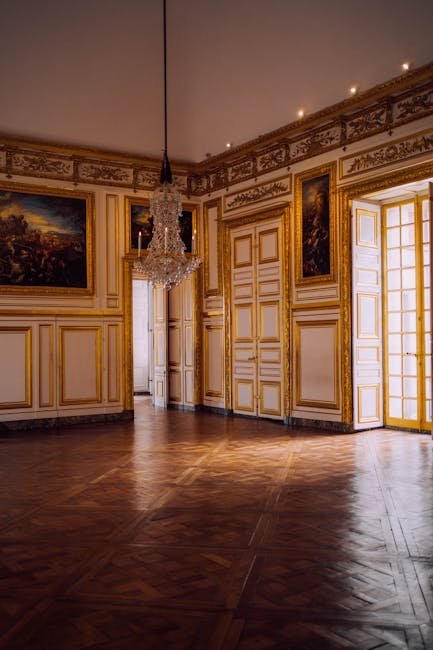
Versailles established the standard for royal palaces for the next century. Its layout, with the king's bedroom at the exact center of the palace facing the rising sun, made explicit the equation of monarchy with divinity. The endless enfilade of salons, each more richly decorated than the last, formed a processional route designed to build anticipation and awe.
The park around Versailles is equally ambitious. Andre Le Notre's gardens extend the palace axes to the horizon, with canals, fountains, and bosquets (ornamental groves) covering over 800 hectares. The scale is deliberately inhuman, designed to remind visitors of their insignificance before royal power.
Key Baroque Features
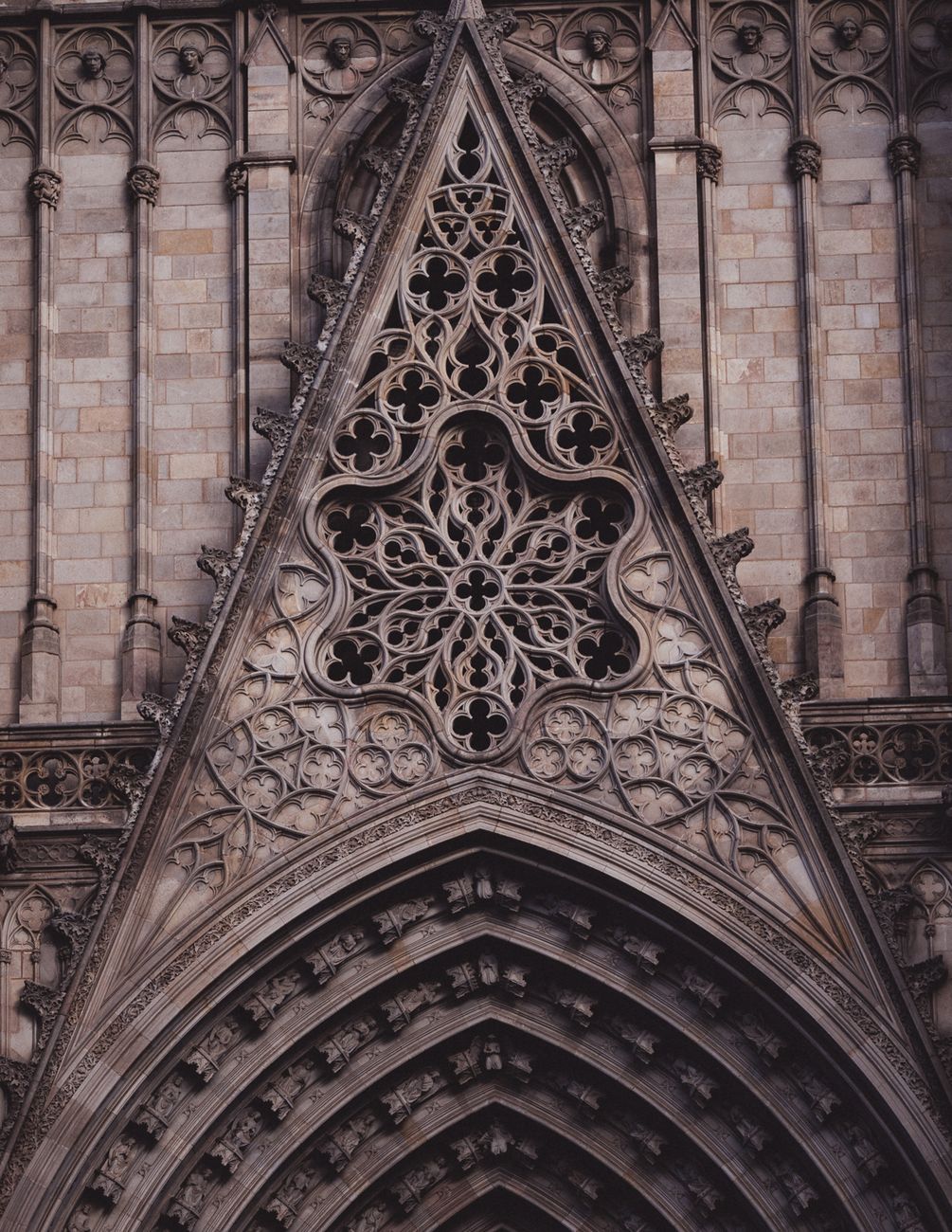
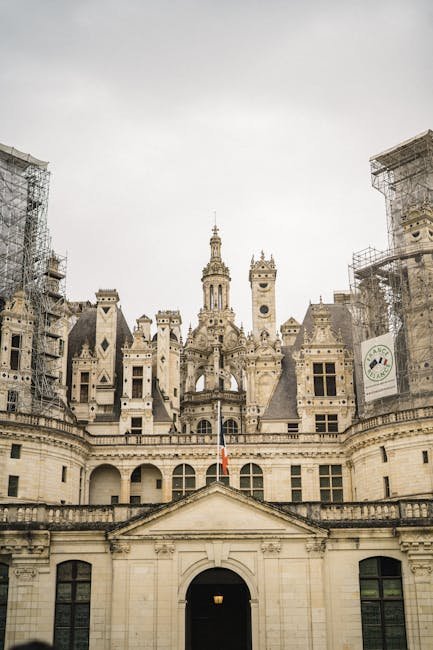
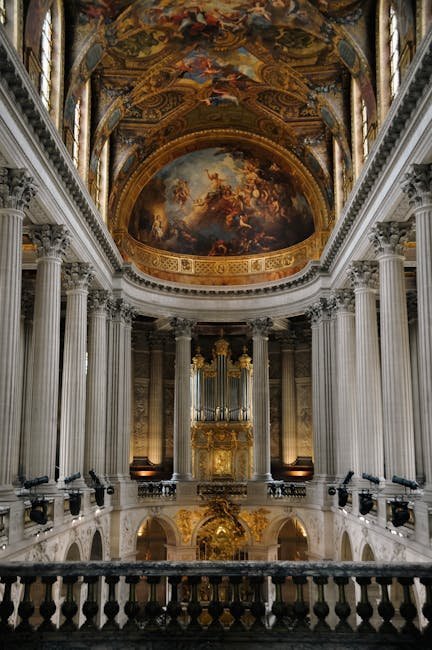
Baroque palaces are characterized by curved walls and broken pediments that create movement across facades. Columns and pilasters are grouped in dramatic clusters. Interior spaces feature illusionistic ceiling frescoes that seem to open the roof to the heavens, with painted figures floating in cloudy skies.
Materials were chosen for maximum impact. Polychrome marble, gilded bronze, stucco, and mirrors created interiors of extraordinary richness. The use of mirrors was particularly innovative, multiplying natural light and creating the illusion of expanded space. The Hall of Mirrors at Versailles originally contained silver furniture that was later melted down to fund wars.
Staircases became major ceremonial spaces in their own right. The Scala Regia in the Vatican Palace, designed by Bernini, uses forced perspective to make a constrained space appear grander than it is. This manipulation of perception is quintessentially Baroque.
Schonbrunn & Other Palaces
The Habsburgs responded to Versailles with Schonbrunn Palace in Vienna. Though not as large, Schonbrunn matches Versailles in opulence. The Great Gallery, the Hall of Mirrors, and the millions of rooms display a Rococo-influenced Baroque that feels lighter and more playful than its French counterpart.
Other notable Baroque palaces include the Royal Palace of Madrid, the Zwinger in Dresden, and Peterhof outside St. Petersburg. Each adapted the Baroque vocabulary to local traditions and materials. The Spanish Baroque, for instance, developed an exceptionally ornate style called Churrigueresque, named after the Churriguera family of architects.
In Germany, the Wurzburg Residence by Balthasar Neumann features the world's largest ceiling fresco in its grand staircase hall, painted by Tiepolo. The palace represents the fusion of French, Italian, and German Baroque traditions that makes central Europe a treasure house of Baroque architecture.
From Baroque to Rococo
In the early 18th century, Baroque developed into Rococo, a lighter, more playful style that emphasized asymmetry, pastel colors, and decorative excess. While Baroque was about power and grandeur, Rococo was about pleasure and intimacy. The petit appartements at Versailles, away from the formal state rooms, exemplify this shift.
Rococo interiors used stucco, shellwork, and gilded carving to create organic, flowing environments. The Hotel de Soubise in Paris and the Amalienburg hunting lodge near Munich represent Rococo at its most exquisite. The style was eventually overtaken by Neoclassicism, which returned to the more severe lines of Greek and Roman architecture.
"Baroque architecture is the art of the infinite made visible, where walls dissolve into light and ceilings open to the heavens, celebrating the boundless glory of God and king."
Further Reading
Learn more about Baroque architecture on Wikipedia and explore broader Western architecture traditions.
Versailles as a Political Instrument
The Palace of Versailles was not simply a royal residence but a sophisticated instrument of political control. Louis XIV moved the court to Versailles in 1682 to escape the unreliable Parisian population and to keep the nobility under constant surveillance. The elaborate court etiquette and the daily rituals of the king's lever and coucher forced nobles to compete for the king's favor through attendance at court, keeping them occupied with ceremonial duties rather than political intrigue.
The Hall of Mirrors, the most famous room at Versailles, was designed as a setting for court ceremonies and diplomatic receptions. Its seventeen mirror-clad arches reflect the seventeen windows overlooking the gardens, creating an architectural effect of unprecedented splendor. The ceiling painted by Charles Le Brun depicts the military victories and achievements of Louis XIV, presenting the king's reign as a golden age comparable to that of Alexander the Great or Augustus.
The gardens of Versailles, designed by Andre Le Notre, extended the architectural axis of the palace to the horizon. The parterres, fountains, canals, and bosquets (ornamental groves) were laid out on a geometric system that demonstrated human reason imposing order on nature. The Grand Canal, over a mile long, created a dramatic vista that seemed to extend to infinity, symbolizing the unlimited reach of the Sun King's power.
Versailles established a model of royal residence that was imitated across Europe. The Palace of Peterhof near St. Petersburg, the Schonbrunn Palace in Vienna, and the Royal Palace of La Granja in Spain all adapted the Versailles formula of palace and garden. The political function of these palaces, as instruments of absolutist display and noble control, was as important as their architectural magnificence.
The Baroque Phenomenon
Baroque palace architecture emerged in the late 16th century and reached its zenith in the 17th and early 18th centuries. It was architecture as political theater, designed to overwhelm visitors with the wealth and power of absolute monarchs. Where Renaissance architecture sought harmonious balance, Baroque pushed toward dramatic intensity.
The style originated in Rome, where the Catholic Church used it as a visual weapon against the Protestant Reformation. St. Peter's Basilica, Bernini's colonnade, and the churches of Borromini established a vocabulary of curves, light, and illusion that soon spread to royal palaces across Europe.
Versailles: The Ultimate Palace
The Palace of Versailles is the definitive Baroque palace, built by Louis XIV to house the French court and government. Every aspect of its design served to glorify the Sun King. The famous Hall of Mirrors, with 17 arched mirrors facing 17 windows, created an indoor space of dazzling brilliance that had no precedent.
Versailles established the standard for royal palaces for the next century. Its layout, with the king's bedroom at the exact center of the palace facing the rising sun, made explicit the equation of monarchy with divinity. The endless enfilade of salons, each more richly decorated than the last, formed a processional route designed to build anticipation and awe.
The park around Versailles is equally ambitious. Andre Le Notre's gardens extend the palace axes to the horizon, with canals, fountains, and bosquets (ornamental groves) covering over 800 hectares. The scale is deliberately inhuman, designed to remind visitors of their insignificance before royal power.
Key Baroque Features
Baroque palaces are characterized by curved walls and broken pediments that create movement across facades. Columns and pilasters are grouped in dramatic clusters. Interior spaces feature illusionistic ceiling frescoes that seem to open the roof to the heavens, with painted figures floating in cloudy skies.
Materials were chosen for maximum impact. Polychrome marble, gilded bronze, stucco, and mirrors created interiors of extraordinary richness. The use of mirrors was particularly innovative, multiplying natural light and creating the illusion of expanded space. The Hall of Mirrors at Versailles originally contained silver furniture that was later melted down to fund wars.
Staircases became major ceremonial spaces in their own right. The Scala Regia in the Vatican Palace, designed by Bernini, uses forced perspective to make a constrained space appear grander than it is. This manipulation of perception is quintessentially Baroque.
Schonbrunn & Other Palaces
The Habsburgs responded to Versailles with Schonbrunn Palace in Vienna. Though not as large, Schonbrunn matches Versailles in opulence. The Great Gallery, the Hall of Mirrors, and the millions of rooms display a Rococo-influenced Baroque that feels lighter and more playful than its French counterpart.
Other notable Baroque palaces include the Royal Palace of Madrid, the Zwinger in Dresden, and Peterhof outside St. Petersburg. Each adapted the Baroque vocabulary to local traditions and materials. The Spanish Baroque, for instance, developed an exceptionally ornate style called Churrigueresque, named after the Churriguera family of architects.
In Germany, the Wurzburg Residence by Balthasar Neumann features the world's largest ceiling fresco in its grand staircase hall, painted by Tiepolo. The palace represents the fusion of French, Italian, and German Baroque traditions that makes central Europe a treasure house of Baroque architecture.
From Baroque to Rococo
In the early 18th century, Baroque developed into Rococo, a lighter, more playful style that emphasized asymmetry, pastel colors, and decorative excess. While Baroque was about power and grandeur, Rococo was about pleasure and intimacy. The petit appartements at Versailles, away from the formal state rooms, exemplify this shift.
Rococo interiors used stucco, shellwork, and gilded carving to create organic, flowing environments. The Hotel de Soubise in Paris and the Amalienburg hunting lodge near Munich represent Rococo at its most exquisite. The style was eventually overtaken by Neoclassicism, which returned to the more severe lines of Greek and Roman architecture.
"Baroque architecture is the art of the infinite made visible, where walls dissolve into light and ceilings open to the heavens, celebrating the boundless glory of God and king."
Versailles as a Political Instrument
The Palace of Versailles was not simply a royal residence but a sophisticated instrument of political control. Louis XIV moved the court to Versailles in 1682 to escape the unreliable Parisian population and to keep the nobility under constant surveillance. The elaborate court etiquette and the daily rituals of the king's lever and coucher forced nobles to compete for the king's favor through attendance at court, keeping them occupied with ceremonial duties rather than political intrigue.
The Hall of Mirrors, the most famous room at Versailles, was designed as a setting for court ceremonies and diplomatic receptions. Its seventeen mirror-clad arches reflect the seventeen windows overlooking the gardens, creating an architectural effect of unprecedented splendor. The ceiling painted by Charles Le Brun depicts the military victories and achievements of Louis XIV, presenting the king's reign as a golden age comparable to that of Alexander the Great or Augustus.
The gardens of Versailles, designed by Andre Le Notre, extended the architectural axis of the palace to the horizon. The parterres, fountains, canals, and bosquets (ornamental groves) were laid out on a geometric system that demonstrated human reason imposing order on nature. The Grand Canal, over a mile long, created a dramatic vista that seemed to extend to infinity, symbolizing the unlimited reach of the Sun King's power.
Versailles established a model of royal residence that was imitated across Europe. The Palace of Peterhof near St. Petersburg, the Schonbrunn Palace in Vienna, and the Royal Palace of La Granja in Spain all adapted the Versailles formula of palace and garden. The political function of these palaces, as instruments of absolutist display and noble control, was as important as their architectural magnificence.
Baroque Palace Gardens and Landscape Design
The gardens surrounding Baroque palaces were as meticulously planned as the buildings themselves, embodying the era's obsession with order, control, and grandeur. French formal gardens, epitomized by Andre Le Notre's designs at Versailles, extended the palace's central axis outward for miles, creating a seamless transition from architecture to nature. These gardens featured precisely clipped hedges, geometric parterres, ornamental lakes, and grand canals that reflected the sky and amplified the sense of boundless space. Statues, fountains, and grottos were placed at strategic intersections, each carrying mythological or political symbolism that reinforced the monarch's divine status.
Water played a central role in Baroque garden design, both as a decorative element and as a demonstration of engineering prowess. The fountains at Versailles, supplied by an elaborate hydraulic system called the Machine de Marly, could shoot water over sixty feet into the air — a remarkable technical achievement for the seventeenth century. The Water Theater at the Palace of Peterhof in Russia featured cascading waterfalls, trick fountains designed to surprise guests, and a Grand Cascade with over sixty fountains gilded in gold leaf. These aquatic displays were not merely ornamental; they symbolized the ruler's ability to command nature itself.
Baroque palace gardens also served as outdoor theaters for courtly entertainment. Elaborate festivals, firework displays, and theatrical performances were staged in garden venues designed specifically for such spectacles. The Orangery at Versailles hosted exotic plants and winter celebrations, while the labyrinth mazes provided playful challenges for guests. These gardens were designed to be experienced as a sequence of unfolding vistas, with carefully framed views that revealed new surprises at every turn — a principle that would profoundly influence landscape architecture across Europe for centuries to come.
Baroque palace architecture represents one of the most ambitious expressions of royal and imperial power in European history. The lavishness of these complexes was intended to communicate absolute authority through architectural means. Every element, from the axial approach to the grand staircase and sequence of state rooms, was choreographed to create a theatrical experience reinforcing the ruler magnificence.
The influence of Baroque palace design extended far beyond royal residences. Townhouses of the aristocracy and country estates adopted Baroque elements such as dramatic facades, monumental staircases, and richly decorated interiors. The vocabulary of Baroque architecture became the language of prestige throughout Europe and its colonies.
The construction of a Baroque palace was an extraordinary undertaking that mobilized vast resources and hundreds of skilled craftsmen. Architects, sculptors, painters, stucco workers, and garden designers collaborated to create unified works of art that encompassed architecture, painting, sculpture, and landscape design. The palace of Versailles, the model for Baroque palaces across Europe, employed thousands of workers for decades and consumed a significant portion of the French royal budget. Its Hall of Mirrors, with seventeen arches reflecting the gardens through mirrored panels, became the most imitated interior space in European architecture.
The daily life within Baroque palaces was as theatrical as their architecture. The elaborate court ceremonies, particularly the lever and coucher of the monarch, were performed in suites of rooms designed specifically for these rituals. The enfilade, a sequence of rooms aligned along a single axis with doors left open to create a sweeping vista, allowed visitors to glimpse the hierarchy of spaces and the status of their host. The bedroom of the monarch, located at the center of the enfilade, was the symbolic heart of the palace. This integration of architecture and ritual created an environment where every action, from waking to dining to sleeping, was performed as a public spectacle reinforcing the power and prestige of the ruler.