The Castle on the Rock
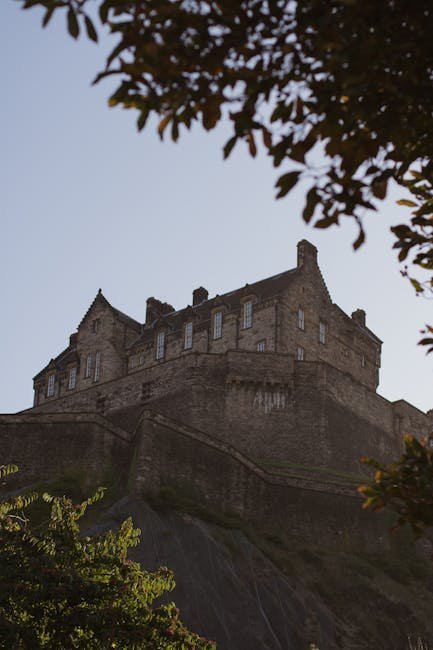
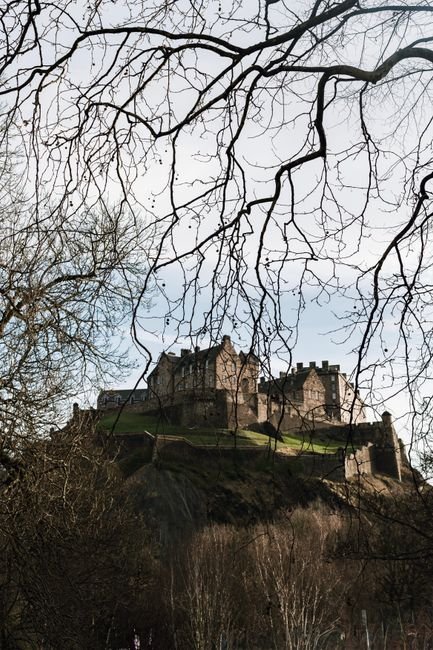
Edinburgh Castle occupies one of the most dramatic natural sites of any castle in Europe. It sits atop Castle Rock, a volcanic plug formed by an ancient eruption 340 million years ago. The rock rises 130 meters above the surrounding landscape, providing a naturally defensible position that has been occupied since at least the Iron Age.
The castle's architecture is a layered palimpsest of Scottish history. The oldest surviving building, St Margaret's Chapel, dates from the early 12th century, while major fortifications were added as recently as the First World War. This architectural stratification makes the castle a three-dimensional timeline of Scottish building traditions.
Unlike many European castles that evolved into comfortable palaces, Edinburgh Castle remained primarily a military fortress and arsenal into the modern era. Its buildings reflect military priorities rather than domestic comfort, giving it a stark, powerful character that distinguishes it from the romantic castles of Bavaria or the Loire.
The Crown Jewels & Honours of Scotland
The Honours of Scotland, the Scottish crown jewels, are the oldest surviving regalia in the British Isles. The crown dates from 1540, the scepter from 1494, and the sword of state from 1507. They were used for the coronation of Scottish monarchs until the union of the crowns in 1603.
During the Wars of the Three Kingdoms, the Honours were hidden to prevent their destruction by Oliver Cromwell's forces. They were concealed in Dunnottar Castle and later smuggled out under the floorboards of a church. After the Act of Union in 1707, they were locked in a chest in Edinburgh Castle and forgotten until 1818, when Sir Walter Scott rediscovered them.
The Stone of Destiny, also known as the Stone of Scone, is another treasure of the castle. Used for centuries in the coronation of Scottish and later British monarchs, the stone was returned to Scotland in 1996 and is displayed alongside the crown jewels in the Crown Room.
Mons Meg & Military Architecture
Mons Meg is a massive medieval bombard (cannon) that could fire a 330-pound stone ball for up to two miles. Built in 1449 in Flanders, it was given to King James II of Scotland in 1457. The cannon was used in sieges until its barrel burst in 1680 and was decommissioned.
The castle's military architecture reflects the evolution of artillery. The Half Moon Battery, built in the 1570s, was designed to mount cannon on a massive stone platform. The Argyle Tower and the Portcullis Gate show how 16th-century defensive works were integrated with existing medieval structures.
The 17th and 18th centuries saw extensive barrack building, as the castle became a major garrison. The New Barracks, built between 1796 and 1799, could house over 600 soldiers. The Governor's House and the Master Gunner's House reflect the social hierarchy of military life.
St Margaret's Chapel & Royal Connections
St Margaret's Chapel, the oldest building in Edinburgh, is a tiny Romanesque structure built by King David I in the early 12th century. It was dedicated to his mother, Queen Margaret, who was later canonized. The chapel measures just 10 by 5 meters but contains beautiful stained glass windows installed in 1922.
The chapel survived centuries of military construction because it was hidden within later buildings and forgotten. It was rediscovered in 1845 during renovations. The chapel remains a popular venue for weddings and baptisms.
Mary, Queen of Scots, gave birth to her son James VI in the castle in 1566, in a small room now known as the Birth Chamber. James would later become James I of England, uniting the Scottish and English crowns. This event was central to the political and religious struggles of the 16th century.
The One O'Clock Gun & Visitor Experience
The One O'Clock Gun is a tradition dating from 1861. A cannon is fired from the Half Moon Battery every day at precisely 1:00 PM, originally to allow ships in the Firth of Forth to synchronize their chronometers. The gun is still fired daily, making it one of the most photographed events at the castle.
Visitors to Edinburgh Castle can explore the National War Museum of Scotland, see the Scottish National War Memorial, and walk along the castle walls for panoramic views of Edinburgh. The Esplanade, built in the 18th century as a parade ground, hosts the annual Royal Edinburgh Military Tattoo.
The castle is Scotland's most popular paid tourist attraction, receiving over 2 million visitors annually. The best times to visit are early morning or late afternoon, when the crowds are smaller and the long summer light casts dramatic shadows across the rock.
"Edinburgh Castle is not merely a building but a symbol of Scottish nationhood, standing guard over the capital from its volcanic throne, embodying the resilience and pride of Scotland itself."
Further Reading
Learn more about Edinburgh Castle on Wikipedia and explore broader Western architecture traditions.
The Stone of Destiny and Scottish Coronations
Edinburgh Castle houses the Stone of Destiny, also known as the Stone of Scone, the ancient coronation stone of Scottish kings. For centuries, Scottish monarchs were crowned seated upon this block of red sandstone. Edward I captured the stone in 1296 and installed it in Westminster Abbey, where it remained for 700 years as part of the English coronation throne. The stone was finally returned to Scotland in 1996 and now resides in the Crown Room of Edinburgh Castle.
The Honours of Scotland, the Scottish crown jewels, are the oldest surviving regalia in the British Isles. Created in 1540 for James V, the crown, sceptre, and sword of state were hidden during the Cromwellian conquest and rediscovered in 1818 by Sir Walter Scott. They have been in continuous ceremonial use since their rediscovery, most recently at the opening ceremonies of the Scottish Parliament.
The castle's military history spans nearly a millennium. The castle was besieged at least twenty-three times, making it the most besieged place in the British Isles. The Lang Siege of 1571-1573, in which supporters of the imprisoned Mary Queen of Scots held the castle against the regent James Douglas, ended with the castle's artillery destruction and the execution of its defenders. The castle's defenses were continually upgraded in response to the evolution of military technology.
The Castle on the Rock
Edinburgh Castle occupies one of the most dramatic natural sites of any castle in Europe. It sits atop Castle Rock, a volcanic plug formed by an ancient eruption 340 million years ago. The rock rises 130 meters above the surrounding landscape, providing a naturally defensible position that has been occupied since at least the Iron Age.
The castle's architecture is a layered palimpsest of Scottish history. The oldest surviving building, St Margaret's Chapel, dates from the early 12th century, while major fortifications were added as recently as the First World War. This architectural stratification makes the castle a three-dimensional timeline of Scottish building traditions.
Unlike many European castles that evolved into comfortable palaces, Edinburgh Castle remained primarily a military fortress and arsenal into the modern era. Its buildings reflect military priorities rather than domestic comfort, giving it a stark, powerful character that distinguishes it from the romantic castles of Bavaria or the Loire.
The Crown Jewels & Honours of Scotland
The Honours of Scotland, the Scottish crown jewels, are the oldest surviving regalia in the British Isles. The crown dates from 1540, the scepter from 1494, and the sword of state from 1507. They were used for the coronation of Scottish monarchs until the union of the crowns in 1603.
During the Wars of the Three Kingdoms, the Honours were hidden to prevent their destruction by Oliver Cromwell's forces. They were concealed in Dunnottar Castle and later smuggled out under the floorboards of a church. After the Act of Union in 1707, they were locked in a chest in Edinburgh Castle and forgotten until 1818, when Sir Walter Scott rediscovered them.
The Stone of Destiny, also known as the Stone of Scone, is another treasure of the castle. Used for centuries in the coronation of Scottish and later British monarchs, the stone was returned to Scotland in 1996 and is displayed alongside the crown jewels in the Crown Room.
Mons Meg & Military Architecture
Mons Meg is a massive medieval bombard (cannon) that could fire a 330-pound stone ball for up to two miles. Built in 1449 in Flanders, it was given to King James II of Scotland in 1457. The cannon was used in sieges until its barrel burst in 1680 and was decommissioned.
The castle's military architecture reflects the evolution of artillery. The Half Moon Battery, built in the 1570s, was designed to mount cannon on a massive stone platform. The Argyle Tower and the Portcullis Gate show how 16th-century defensive works were integrated with existing medieval structures.
The 17th and 18th centuries saw extensive barrack building, as the castle became a major garrison. The New Barracks, built between 1796 and 1799, could house over 600 soldiers. The Governor's House and the Master Gunner's House reflect the social hierarchy of military life.
St Margaret's Chapel & Royal Connections
St Margaret's Chapel, the oldest building in Edinburgh, is a tiny Romanesque structure built by King David I in the early 12th century. It was dedicated to his mother, Queen Margaret, who was later canonized. The chapel measures just 10 by 5 meters but contains beautiful stained glass windows installed in 1922.
The chapel survived centuries of military construction because it was hidden within later buildings and forgotten. It was rediscovered in 1845 during renovations. The chapel remains a popular venue for weddings and baptisms.
Mary, Queen of Scots, gave birth to her son James VI in the castle in 1566, in a small room now known as the Birth Chamber. James would later become James I of England, uniting the Scottish and English crowns. This event was central to the political and religious struggles of the 16th century.
The One O'Clock Gun & Visitor Experience
The One O'Clock Gun is a tradition dating from 1861. A cannon is fired from the Half Moon Battery every day at precisely 1:00 PM, originally to allow ships in the Firth of Forth to synchronize their chronometers. The gun is still fired daily, making it one of the most photographed events at the castle.
Visitors to Edinburgh Castle can explore the National War Museum of Scotland, see the Scottish National War Memorial, and walk along the castle walls for panoramic views of Edinburgh. The Esplanade, built in the 18th century as a parade ground, hosts the annual Royal Edinburgh Military Tattoo.
The castle is Scotland's most popular paid tourist attraction, receiving over 2 million visitors annually. The best times to visit are early morning or late afternoon, when the crowds are smaller and the long summer light casts dramatic shadows across the rock.
"Edinburgh Castle is not merely a building but a symbol of Scottish nationhood, standing guard over the capital from its volcanic throne, embodying the resilience and pride of Scotland itself."
The Stone of Destiny and Scottish Coronations
Edinburgh Castle houses the Stone of Destiny, also known as the Stone of Scone, the ancient coronation stone of Scottish kings. For centuries, Scottish monarchs were crowned seated upon this block of red sandstone. Edward I captured the stone in 1296 and installed it in Westminster Abbey, where it remained for 700 years as part of the English coronation throne. The stone was finally returned to Scotland in 1996 and now resides in the Crown Room of Edinburgh Castle.
The Honours of Scotland, the Scottish crown jewels, are the oldest surviving regalia in the British Isles. Created in 1540 for James V, the crown, sceptre, and sword of state were hidden during the Cromwellian conquest and rediscovered in 1818 by Sir Walter Scott. They have been in continuous ceremonial use since their rediscovery, most recently at the opening ceremonies of the Scottish Parliament.
The castle's military history spans nearly a millennium. The castle was besieged at least twenty-three times, making it the most besieged place in the British Isles. The Lang Siege of 1571-1573, in which supporters of the imprisoned Mary Queen of Scots held the castle against the regent James Douglas, ended with the castle's artillery destruction and the execution of its defenders. The castle's defenses were continually upgraded in response to the evolution of military technology.
Edinburgh Castle and the Wars of Scottish Independence
Edinburgh Castle played a pivotal role in the Wars of Scottish Independence, a series of conflicts that shaped the nation's identity between the late thirteenth and mid-fourteenth centuries. The castle changed hands multiple times, enduring prolonged sieges, daring nighttime raids, and dramatic recaptures. One of the most famous episodes occurred in 1314 when Sir Thomas Randolph, nephew of Robert the Bruce, led a small party of soldiers up the castle's northern cliff face — a route deemed impassable by the English garrison. The successful capture restored the castle to Scottish control and became a legendary tale of tactical brilliance.
The castle's military architecture evolved considerably in response to the development of gunpowder weapons. The half-moon battery, built in the sixteenth century, replaced the medieval entrance with a massive artillery fortification designed to withstand cannon fire. The Argyle Battery, Mills Mount Battery, and other defensive positions mounted bronze cannons that commanded the approaches to the city below. The One o'Clock Gun, fired daily since 1861, began as a time signal for ships in the Firth of Forth but continues as a beloved tradition that draws crowds of visitors each afternoon.
Edinburgh Castle also safeguards some of Scotland's most treasured artifacts, including the Crown Jewels (the Honours of Scotland), the Stone of Destiny, and Mons Meg — a colossal medieval bombard. The Stone of Destiny, used for centuries in the coronation of Scottish kings, was taken to England by Edward I in 1296 and remained at Westminster Abbey for over 700 years before being returned to Scotland in 1996. These artifacts transform the castle from a purely military structure into a living museum of Scottish heritage, connecting modern visitors to the deep wellspring of national history.
Edinburgh Castle has played a central role in Scottish history for nearly a millennium, serving as a royal residence, military garrison, prison, and fortress. Its position atop an extinct volcano made it one of the most defensible locations in Britain. The castle witnessed the Wars of Scottish Independence, the Siege of 1689, and the Jacobite risings.
Today the castle is one of Scotland most visited attractions. The Crown Jewels of Scotland, known as the Honours of Scotland, are displayed in the Crown Room. The One o Clock Gun, fired daily since 1861, continues as an Edinburgh tradition. The castle also serves as the backdrop for the Edinburgh Military Tattoo, an annual event showcasing military bands from around the world.
The military history of Edinburgh Castle is written in its architecture. The oldest surviving building, St Margaret Chapel, dates from the 12th century and is the oldest building in Edinburgh. The castle was besieged at least 26 times, making it the most besieged place in Great Britain and one of the most attacked in the world. The successful defenses of the castle demonstrate the effectiveness of its natural and built fortifications. The Argyle Battery, with its commanding views over the city, and the Half Moon Battery, built after the castle was partially destroyed in the Lang Siege of 1573, represent the evolution of artillery fortification.
The castle also played a significant military role in the 20th century. During World War I, the castle was used as a military prison, and during World War II, it served as a headquarters for the Royal Navy. The National War Museum of Scotland, located within the castle, tells the story of Scottish military history from the 17th century to the present day. The Scottish National War Memorial, housed in a converted barrack block, commemorates Scottish soldiers who died in both world wars and subsequent conflicts. The military presence at the castle continues today, with the Governor of Edinburgh Castle representing the British Army within the city.