The Return to Antiquity
Neoclassical architecture emerged in the mid-18th century as a reaction against the perceived excesses of Baroque and Rococo. It represented a return to the supposed purity and rationality of Greek and Roman architecture, driven by Enlightenment ideas about reason, virtue, and democracy.
The discovery of the Roman cities of Pompeii and Herculaneum in the 1730s and 1740s sparked intense interest in authentic ancient architecture. Johann Joachim Winckelmann's writings on Greek art (1755) promoted Greek simplicity and nobility as the highest artistic achievement.
Neoclassicism was not a simple revival but a systematic reinterpretation of classical forms based on archaeological evidence, rather than the Renaissance tradition. Architects measured ancient buildings directly and published detailed engravings that became pattern books for the new style.
Key Features & Principles
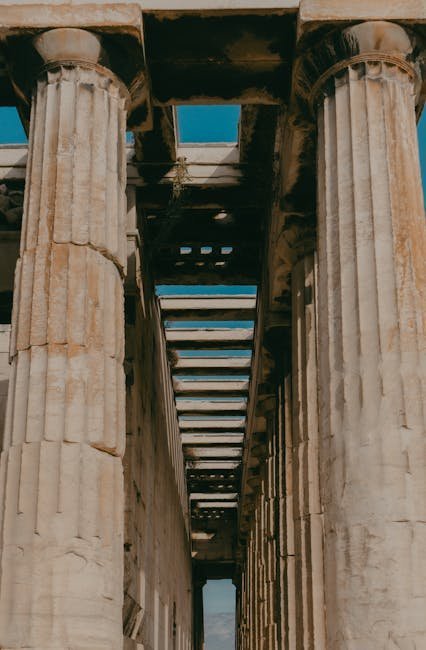
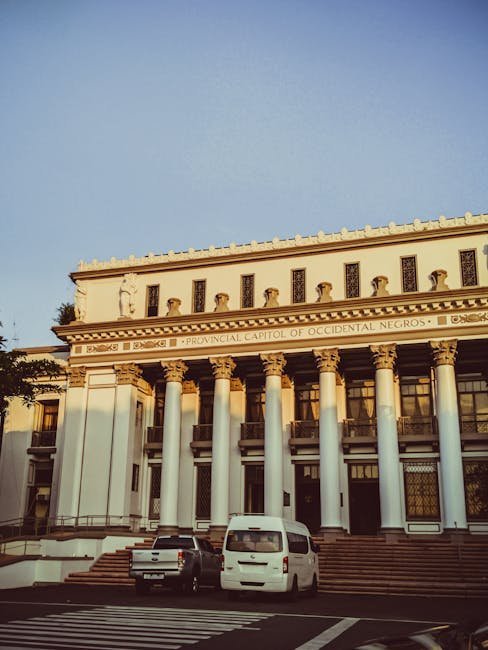
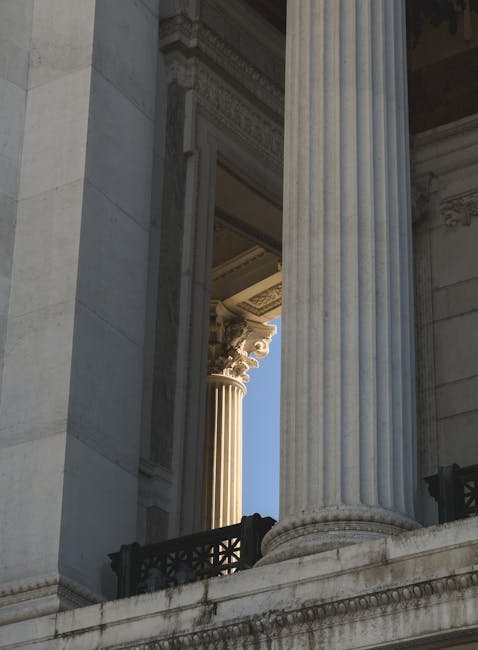
Neoclassical buildings emphasize symmetry, geometric clarity, and the primacy of the wall plane. Columns are used as functional supports or applied as engaged columns and pilasters. The classical orders are used correctly according to ancient models, in contrast to the free interpretation of Renaissance architecture.
Facades are typically flat and severe, with minimal ornament. Windows are rectangular with simple surrounds, often alternating with blank niches or relief panels. The overall effect is one of calm authority and rational order. Color is minimal, usually white stone or stucco.
The Greek Revival, a more archaeologically rigorous form of Neoclassicism, became particularly important in the early 19th century. It used Greek Doric forms, often without bases, and featured wide, low-pitched pediments. The Greek Revival was especially popular in Germany, Britain, and the United States.
The Panthéon & Church Architecture
Jacques-Germain Soufflot's Church of Sainte-Genevieve in Paris, later renamed the Panthéon (1757-1790), is the masterpiece of French Neoclassical church architecture. Its portico of Corinthian columns supports a Roman-style pediment, and the interior is covered by a dome on pendentives inspired by St. Paul's Cathedral.
The Church of the Madeleine in Paris, designed as a Roman temple with a massive colonnade surrounding the entire building, represents the most extreme application of temple form to Christian worship. It was completed in 1842 after decades of interrupted construction.
Neoclassical churches replaced the theatricality of Baroque with a more sober, intellectual spirituality. The clear geometry and logical structure of these buildings reflected the Enlightenment belief that reason and faith could be reconciled.
Government & Public Buildings
Neoclassicism became the official style of democratic and imperial governments across the Western world. Its association with ancient Greek democracy and Roman republican virtues made it the natural choice for government buildings in the new American republic and revolutionary France.
The United States Capitol (1793-present) is the most important Neoclassical building in America. Its original design by William Thornton, the Senate and House wings by Benjamin Latrobe, and the great dome by Thomas U. Walter represent 70 years of Neoclassical evolution.
The British Museum (1823-1852) by Robert Smirke uses a monumental Ionic colonnade across its entrance front. The Altes Museum in Berlin (1823-1830) by Karl Friedrich Schinkel creates a temple-fronted building raised on a podium, with a Rotunda inspired by the Pantheon. These buildings established Neoclassicism as the language of cultural institutions.
The Spread of Neoclassicism
Neoclassicism became a truly global style. In Russia, Catherine the Great and her successors embraced French-inspired Neoclassicism for St. Petersburg's palaces and public buildings. The Tauride Palace, designed by Ivan Starov, and the Alexander Palace by Giacomo Quarenghi brought refined classicism to Russia.
In Scotland, Robert Adam developed a highly personal Neoclassical style that combined Roman, Greek, and even Byzantine elements with delicate interior ornament. The Adelphi in London, Kedleston Hall, and Syon House demonstrate his range from urban terrace to country house.
In the 20th century, Neoclassicism was adopted by totalitarian regimes, from Mussolini's EUR district in Rome to Hitler's Speer-planned Berlin and Stalin's Seven Sisters skyscrapers. This association discredited the style after World War II, but its fundamental principles continue to influence traditional and classical architecture today.
"Noble simplicity and tranquil grandeur are the true marks of classical art, qualities that speak to the eternal truths of reason, order, and human dignity."
Neoclassical Interiors and Decorative Arts
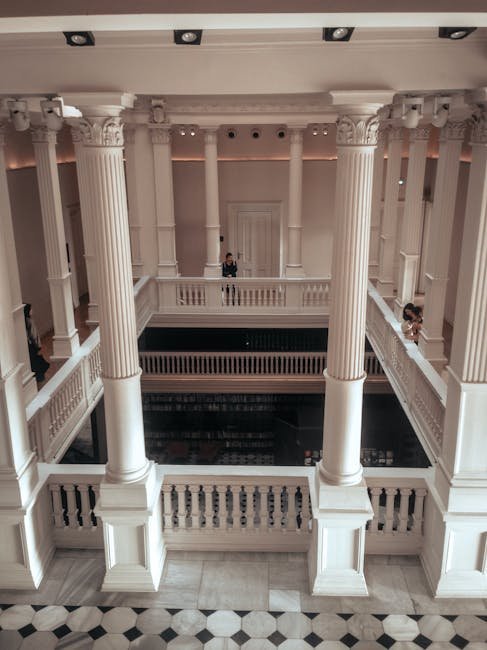
Neoclassical interiors were as carefully composed as the buildings that contained them. Robert Adam, the most influential British Neoclassical interior designer, developed a distinctive style that combined Roman, Greek, and Etruscan motifs with delicate stucco ornament, arabesques, and restrained color palettes. His interiors at Syon House, Osterley Park, and Kenwood House feature elegant geometric ceilings, apsidal-ended rooms, and carefully proportioned spatial sequences that reflect Enlightenment ideals of order and refinement.
Furniture design followed Neoclassical principles of clarity and proportion. The Louis XVI style in France, named after the king who reigned when it flourished, replaced the curves of Rococo with straight lines, geometric forms, and classical ornament. Jean-Henri Riesener, the most celebrated cabinetmaker of the period, created furniture of extraordinary technical refinement using mahogany, ebony, gilt bronze mounts, and marquetry panels depicting classical scenes.
Neoclassicism also influenced the decorative arts, including porcelain, silver, textiles, and wallpaper. The Sevres porcelain factory produced vases and tableware with classical cameo decorations. Wedgwood's jasperware, with its white classical reliefs against colored backgrounds, brought Neoclassical design to middle-class homes. The Director e and Empire styles that followed the French Revolution adapted Neoclassical forms to express republican and Napoleonic ideals, spreading the classical vocabulary even further through European and American material culture.
The legacy of Neoclassical interiors persists in contemporary design. The principles of symmetry, proportion, and restrained decoration continue to influence interior designers, particularly in civic and institutional spaces. The Neoclassical ideal of architecture as a complete work of art, encompassing interior decoration, furniture, and decorative objects in a unified classical vocabulary, remains one of the most coherent design approaches in the Western tradition.
Neoclassical Landscape Gardens and the Picturesque
Neoclassical principles extended beyond buildings into the designed landscape. The English landscape garden, developed by William Kent, Capability Brown, and Humphry Repton, applied classical ideals of harmony and proportion to the natural environment. Brown's parks, with their serpentine lakes, clumped trees, and carefully graded lawns, created idealized landscapes that appeared natural while being entirely artificial.
The garden buildings or follies were essential elements of the Neoclassical landscape. Temples, pavilions, grottoes, and artificial ruins were placed at strategic viewpoints to create picturesque vistas and evoke classical associations. Stourhead in Wiltshire features a Pantheon, a Temple of Apollo, and a Grotto arranged around a lake in a carefully composed circuit that unfolds like a landscape painting.
The Picturesque movement argued for a more varied and irregular approach to landscape design. The Picturesque found beauty in roughness, irregularity, and sudden variation, qualities that would later influence Romantic architecture and the Gothic Revival. The debate between the Beautiful, the Sublime, and the Picturesque shaped landscape design for a century.
Cemetery design was transformed by Neoclassical landscape principles. Pere Lachaise Cemetery in Paris, Mount Auburn Cemetery in Cambridge, Massachusetts, and Kensal Green Cemetery in London applied garden cemetery principles to create contemplative landscapes that served as public parks as well as burial grounds. These cemeteries, with their classical monuments and winding paths, became models for urban green space design throughout the nineteenth century.
Neoclassicism in America: The Young Republic
The United States adopted Neoclassicism as its national architectural style with remarkable consistency. Thomas Jefferson, the most architecturally literate of the founding fathers, championed classical architecture as the appropriate expression of republican virtues. His design for the Virginia State Capitol (1785-1788) directly referenced the Maison Carree in Nimes, establishing the temple-fronted public building as the archetype of American civic architecture.
Washington DC was conceived as a Neoclassical city on an ambitious scale. Pierre L'Enfant's 1791 plan combined Baroque avenues with a classical grid, creating a urban framework that would be filled with Neoclassical buildings over the following two centuries. The White House, the Capitol, the Treasury Building, and the Supreme Court all employ classical forms adapted to American needs. The Lincoln Memorial (1922), with its thirty-six Doric columns, represents perhaps the purest Greek revival statement in America.
American Neoclassicism was not limited to government buildings. Universities followed the classical model, with Thomas Jefferson's University of Virginia (1819-1826) creating an academic village of temple-fronted pavilions around a central lawn. Libraries, museums, banks, and private residences all adopted classical forms. The American Greek Revival of the 1820s-1850s brought Neoclassical architecture to Main Street, creating a vernacular classicism that defined the look of countless American towns and cities.
The Return to Antiquity
Neoclassical architecture emerged in the mid-18th century as a reaction against the perceived excesses of Baroque and Rococo. It represented a return to the supposed purity and rationality of Greek and Roman architecture, driven by Enlightenment ideas about reason, virtue, and democracy.
The discovery of the Roman cities of Pompeii and Herculaneum in the 1730s and 1740s sparked intense interest in authentic ancient architecture. Johann Joachim Winckelmann's writings on Greek art (1755) promoted Greek simplicity and nobility as the highest artistic achievement.
Neoclassicism was not a simple revival but a systematic reinterpretation of classical forms based on archaeological evidence, rather than the Renaissance tradition. Architects measured ancient buildings directly and published detailed engravings that became pattern books for the new style.
Key Features & Principles
Neoclassical buildings emphasize symmetry, geometric clarity, and the primacy of the wall plane. Columns are used as functional supports or applied as engaged columns and pilasters. The classical orders are used correctly according to ancient models, in contrast to the free interpretation of Renaissance architecture.
Facades are typically flat and severe, with minimal ornament. Windows are rectangular with simple surrounds, often alternating with blank niches or relief panels. The overall effect is one of calm authority and rational order. Color is minimal, usually white stone or stucco.
The Greek Revival, a more archaeologically rigorous form of Neoclassicism, became particularly important in the early 19th century. It used Greek Doric forms, often without bases, and featured wide, low-pitched pediments. The Greek Revival was especially popular in Germany, Britain, and the United States.
The Panthéon & Church Architecture
Jacques-Germain Soufflot's Church of Sainte-Genevieve in Paris, later renamed the Panthéon (1757-1790), is the masterpiece of French Neoclassical church architecture. Its portico of Corinthian columns supports a Roman-style pediment, and the interior is covered by a dome on pendentives inspired by St. Paul's Cathedral.
The Church of the Madeleine in Paris, designed as a Roman temple with a massive colonnade surrounding the entire building, represents the most extreme application of temple form to Christian worship. It was completed in 1842 after decades of interrupted construction.
Neoclassical churches replaced the theatricality of Baroque with a more sober, intellectual spirituality. The clear geometry and logical structure of these buildings reflected the Enlightenment belief that reason and faith could be reconciled.
Government & Public Buildings
Neoclassicism became the official style of democratic and imperial governments across the Western world. Its association with ancient Greek democracy and Roman republican virtues made it the natural choice for government buildings in the new American republic and revolutionary France.
The United States Capitol (1793-present) is the most important Neoclassical building in America. Its original design by William Thornton, the Senate and House wings by Benjamin Latrobe, and the great dome by Thomas U. Walter represent 70 years of Neoclassical evolution.
The British Museum (1823-1852) by Robert Smirke uses a monumental Ionic colonnade across its entrance front. The Altes Museum in Berlin (1823-1830) by Karl Friedrich Schinkel creates a temple-fronted building raised on a podium, with a Rotunda inspired by the Pantheon. These buildings established Neoclassicism as the language of cultural institutions.
The Spread of Neoclassicism
Neoclassicism became a truly global style. In Russia, Catherine the Great and her successors embraced French-inspired Neoclassicism for St. Petersburg's palaces and public buildings. The Tauride Palace, designed by Ivan Starov, and the Alexander Palace by Giacomo Quarenghi brought refined classicism to Russia.
In Scotland, Robert Adam developed a highly personal Neoclassical style that combined Roman, Greek, and even Byzantine elements with delicate interior ornament. The Adelphi in London, Kedleston Hall, and Syon House demonstrate his range from urban terrace to country house.
In the 20th century, Neoclassicism was adopted by totalitarian regimes, from Mussolini's EUR district in Rome to Hitler's Speer-planned Berlin and Stalin's Seven Sisters skyscrapers. This association discredited the style after World War II, but its fundamental principles continue to influence traditional and classical architecture today.
"Noble simplicity and tranquil grandeur are the true marks of classical art, qualities that speak to the eternal truths of reason, order, and human dignity."
Neoclassical Interiors and Decorative Arts
Neoclassical interiors were as carefully composed as the buildings that contained them. Robert Adam, the most influential British Neoclassical interior designer, developed a distinctive style that combined Roman, Greek, and Etruscan motifs with delicate stucco ornament, arabesques, and restrained color palettes. His interiors at Syon House, Osterley Park, and Kenwood House feature elegant geometric ceilings, apsidal-ended rooms, and carefully proportioned spatial sequences that reflect Enlightenment ideals of order and refinement.
Furniture design followed Neoclassical principles of clarity and proportion. The Louis XVI style in France, named after the king who reigned when it flourished, replaced the curves of Rococo with straight lines, geometric forms, and classical ornament. Jean-Henri Riesener, the most celebrated cabinetmaker of the period, created furniture of extraordinary technical refinement using mahogany, ebony, gilt bronze mounts, and marquetry panels depicting classical scenes.
Neoclassicism also influenced the decorative arts, including porcelain, silver, textiles, and wallpaper. The Sevres porcelain factory produced vases and tableware with classical cameo decorations. Wedgwood's jasperware, with its white classical reliefs against colored backgrounds, brought Neoclassical design to middle-class homes. The Director e and Empire styles that followed the French Revolution adapted Neoclassical forms to express republican and Napoleonic ideals, spreading the classical vocabulary even further through European and American material culture.
The legacy of Neoclassical interiors persists in contemporary design. The principles of symmetry, proportion, and restrained decoration continue to influence interior designers, particularly in civic and institutional spaces. The Neoclassical ideal of architecture as a complete work of art, encompassing interior decoration, furniture, and decorative objects in a unified classical vocabulary, remains one of the most coherent design approaches in the Western tradition.
Neoclassical Landscape Gardens and the Picturesque
Neoclassical principles extended beyond buildings into the designed landscape. The English landscape garden, developed by William Kent, Capability Brown, and Humphry Repton, applied classical ideals of harmony and proportion to the natural environment. Brown's parks, with their serpentine lakes, clumped trees, and carefully graded lawns, created idealized landscapes that appeared natural while being entirely artificial.
The garden buildings or follies were essential elements of the Neoclassical landscape. Temples, pavilions, grottoes, and artificial ruins were placed at strategic viewpoints to create picturesque vistas and evoke classical associations. Stourhead in Wiltshire features a Pantheon, a Temple of Apollo, and a Grotto arranged around a lake in a carefully composed circuit that unfolds like a landscape painting.
The Picturesque movement argued for a more varied and irregular approach to landscape design. The Picturesque found beauty in roughness, irregularity, and sudden variation, qualities that would later influence Romantic architecture and the Gothic Revival. The debate between the Beautiful, the Sublime, and the Picturesque shaped landscape design for a century.
Cemetery design was transformed by Neoclassical landscape principles. Pere Lachaise Cemetery in Paris, Mount Auburn Cemetery in Cambridge, Massachusetts, and Kensal Green Cemetery in London applied garden cemetery principles to create contemplative landscapes that served as public parks as well as burial grounds. These cemeteries, with their classical monuments and winding paths, became models for urban green space design throughout the nineteenth century.
Neoclassicism in America: The Young Republic
The United States adopted Neoclassicism as its national architectural style with remarkable consistency. Thomas Jefferson, the most architecturally literate of the founding fathers, championed classical architecture as the appropriate expression of republican virtues. His design for the Virginia State Capitol (1785-1788) directly referenced the Maison Carree in Nimes, establishing the temple-fronted public building as the archetype of American civic architecture.
Washington DC was conceived as a Neoclassical city on an ambitious scale. Pierre L'Enfant's 1791 plan combined Baroque avenues with a classical grid, creating a urban framework that would be filled with Neoclassical buildings over the following two centuries. The White House, the Capitol, the Treasury Building, and the Supreme Court all employ classical forms adapted to American needs. The Lincoln Memorial (1922), with its thirty-six Doric columns, represents perhaps the purest Greek revival statement in America.
American Neoclassicism was not limited to government buildings. Universities followed the classical model, with Thomas Jefferson's University of Virginia (1819-1826) creating an academic village of temple-fronted pavilions around a central lawn. Libraries, museums, banks, and private residences all adopted classical forms. The American Greek Revival of the 1820s-1850s brought Neoclassical architecture to Main Street, creating a vernacular classicism that defined the look of countless American towns and cities.
Neoclassicism and the American Republic
Neoclassicism found particularly fertile ground in the young United States, where the style's associations with Athenian democracy and Roman republican virtues made it the natural architectural language for the new nation's institutions. Thomas Jefferson, an amateur architect deeply versed in classical principles, championed the Roman temple form for public buildings, designing the Virginia State Capitol and the original buildings of the University of Virginia around a Roman-inspired Rotunda. Jefferson's vision extended to the new federal city of Washington, where designer Pierre L'Enfant's monumental plan and the classical architecture of the Capitol, the White House, and the Supreme Court established a neoclassical identity for American governance that endures to this day.
Further Reading
Learn more about Neoclassical architecture on Wikipedia and explore broader Western architecture traditions.