Breaking the Box
Deconstructivism emerged in the late 1980s as the most radical challenge to architectural convention since modernism itself. Inspired by the French philosopher Jacques Derrida's theory of deconstruction, the movement rejected the idea that buildings must be stable, orderly, and coherent.
Deconstructivist buildings are characterized by fragmentation, non-rectilinear geometry, and the deliberate violation of architectural norms. Walls lean, floors slope, grids are distorted, and volumes collide. The goal is to create buildings that express the instability and complexity of contemporary experience.
The 1988 Deconstructivist Architecture exhibition at the Museum of Modern Art in New York, curated by Philip Johnson and Mark Wigley, defined the movement and introduced its key figures to a wide audience.
Frank Gehry & the Guggenheim Bilbao
Frank Gehry is the most famous Deconstructivist architect. His Guggenheim Museum Bilbao (1997) transformed a struggling industrial city into a global cultural destination and demonstrated that spectacular architecture could drive urban regeneration.
The building's titanium-clad forms, resembling a ship in flower, are organized around a central atrium that soars 50 meters. Gehry used CATIA, an aerospace design software, to realize the building's complex curved surfaces, pioneering a digital approach to architectural design.
Gehry's earlier work, including the Vitra Design Museum in Germany (1989) and the Walt Disney Concert Hall in Los Angeles (2003), established his language of fragmented, sculptural forms. His later buildings, including the Fondation Louis Vuitton in Paris (2014), show a continuing evolution of his expressive vocabulary.
Zaha Hadid & Parametric Form
Zaha Hadid (1950-2016) was the most original architect of her generation. Her early drawings, influenced by Russian Constructivism, depicted buildings as exploded fragments floating in abstract space. Her completed buildings realized these visions in concrete, steel, and glass.
The Vitra Fire Station (1993) was Hadid's first major built work, a composition of sharp, tilting concrete planes that seem to slice through space. The Rosenthal Center for Contemporary Art in Cincinnati (2003) was her first American building, an urban carpet that folds from street to wall to ceiling.
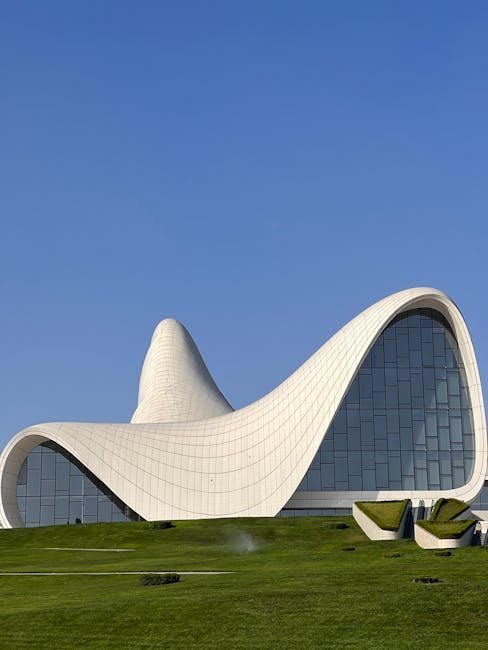
Hadid's later buildings, including the Heydar Aliyev Center in Baku (2012) and the Guangzhou Opera House (2010), used computational design to create continuous, flowing surfaces that blur the boundary between wall, floor, and roof. Her work expanded architecture's formal possibilities.
Other Key Figures
Rem Koolhaas/OMA brought a conceptual, programmatic approach to deconstructivism. The Villa dall'Ava in Paris (1991), the Bordeaux House (1998), and the Seattle Central Library (2004) are radical reorganizations of architectural program as much as form.
Daniel Libeskind's Jewish Museum Berlin (2001) uses fragmented geometry to express the rupture of the Holocaust. The building's zigzag plan, void spaces, and tilted walls create a deeply affecting spatial experience that communicates trauma and loss without literal representation.
Coop Himmelb(l)au's work, including the UFA Cinema Center in Dresden (1998) and the BMW Welt in Munich (2007), pushes deconstructivism toward expressionist extremes, with cantilevering volumes and angular glass shards that seem to defy gravity.
Criticism & Influence
Deconstructivism has been criticized as formalist, expensive, and self-indulgent. Critics argue that deconstructivist buildings prioritize photographic impact over user experience, creating spectacular exteriors with dysfunctional interiors. The Bilbao effect, where a spectacular building is used as an economic development tool, has been both praised and condemned.
The movement's relationship with digital design tools has become increasingly important. As BIM (Building Information Modeling) and parametric design have become standard, the formal language of deconstructivism has become easier to design and build.
Deconstructivism's legacy is visible in the work of many contemporary architects who use digital tools to create complex, non-standard forms. The movement's insistence that architecture can be expressive, emotional, and complex has permanently expanded the range of architectural possibility.
"Deconstructivist architecture accepts the complexity and contradiction of our world, not as a problem to be solved but as a condition to be expressed."
Deconstructivism and Digital Design Tools
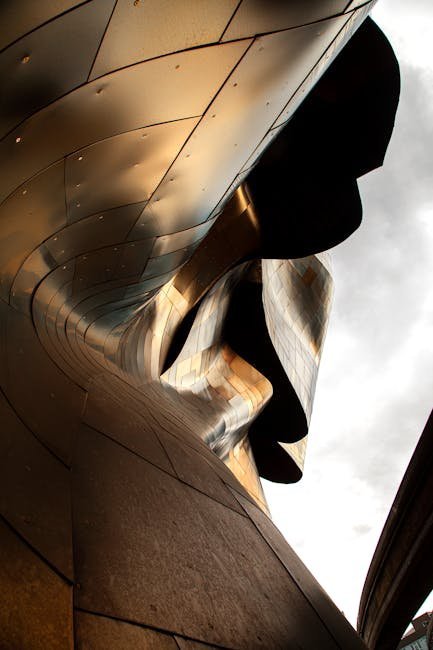
The rise of deconstructivism coincided with the emergence of digital design tools that enabled architects to conceive and realize forms previously impossible to construct. Frank Gehry's use of CATIA, originally developed for aerospace engineering, transformd architectural practice. This software allowed Gehry to translate complex sculptural models directly into construction documents, bridging the gap between artistic vision and technical execution.
Parametric design, pioneered by architects like Patrik Schumacher and Zaha Hadid Architects, took digital design further. Instead of designing specific forms, architects defined parameters and relationships that generated forms algorithmically. This approach allowed for the creation of continuously varying surfaces, adaptive structures, and buildings that could respond to environmental data through their very geometry.
The computational turn in architecture has democratized complex form-making. What once required the resources of a Gehry or Hadid practice can now be achieved by smaller firms using accessible software like Rhinoceros 3D and Grasshopper. Digital fabrication technologies, including CNC milling and 3D printing, have further expanded the architect's ability to create customized, non-standard building components at reasonable cost.
Contemporary architects continue to push the boundaries of digital design. Firms like UNStudio, MVRDV, and BIG (Bjarke Ingels Group) use parametric methods to create buildings that respond to programmatic, environmental, and contextual constraints. The legacy of deconstructivism lives on not primarily in its forms but in its demonstration that architecture can embrace complexity, contradiction, and computational sophistication.
Deconstructivism and Contemporary Urbanism
Deconstructivist approaches to urban design have influenced how contemporary cities are conceived and experienced. The Parc de la Villette in Paris by Bernard Tschumi used deconstructivist principles to create an urban park without traditional hierarchies. Point grids, lines, and surfaces were superimposed to create a landscape of unexpected juxtapositions and programmatic freedom that rejected classical and modernist ordering principles.
Deconstructivism's influence on contemporary museum architecture has been particularly significant. The Jewish Museum Berlin and the Museum of Modern and Contemporary Art in Strasbourg demonstrate how fragmented geometry can create meaningful spatial experiences that engage visitors emotionally and intellectually. These buildings use deconstructivist form not as empty spectacle but as a way to represent historical complexity and cultural uncertainty.
The relationship between deconstructivism and landscape architecture has produced innovative designs where buildings appear to merge with their sites. Daniel Libeskind's Imperial War Museum North in Manchester sits on a reconstructed canal basin, its shattered globe form reflecting in the water. Zaha Hadid's MAXXI Museum in Rome bridges across a former military barracks, creating a new urban connection between the historic center and the Flaminio district.
Contemporary architects continue to draw inspiration from deconstructivist strategies while moving beyond the movement's original formal language. The emphasis on process, layering, and programmatic complexity that deconstructivism introduced has become absorbed into mainstream architectural practice. The movement's greatest legacy may be its demonstration that architecture can engage with philosophical ideas and cultural complexity without abandoning its responsibility to create compelling spaces.
Criticism and Legacy of Deconstructivism
Deconstructivism has been the subject of intense criticism since its emergence. Critics argue that the style prioritizes photographic impact over human experience, creating buildings that are more interesting as images than as places to inhabit. The expense of constructing irregular forms, the difficulty of fitting standard building systems into non-rectilinear spaces, and the frequent compromises between architectural vision and practical function have all been noted as weaknesses of the approach.
The relationship between Deconstructivism and digital design tools has become a subject of debate. Critics question whether the formal complexity enabled by computers serves architectural quality or merely indulges formal novelty. The distinction between form generated by genuine programmatic, structural, or environmental logic and form applied as a stylistic veneer has become increasingly important as digital tools make complex geometry accessible to any architect.
Despite these criticisms, Deconstructivism has permanently expanded the formal vocabulary of architecture. The movement demonstrated that buildings could be fragmented, dynamic, and ambiguous without sacrificing structural integrity or functional performance. Contemporary architects routinely use digital tools to create complex, non-standard forms that would have been inconceivable before the Deconstructivist revolution, regardless of whether they identify with the movement's philosophical foundations.
Breaking the Box
Deconstructivism emerged in the late 1980s as the most radical challenge to architectural convention since modernism itself. Inspired by the French philosopher Jacques Derrida's theory of deconstruction, the movement rejected the idea that buildings must be stable, orderly, and coherent.
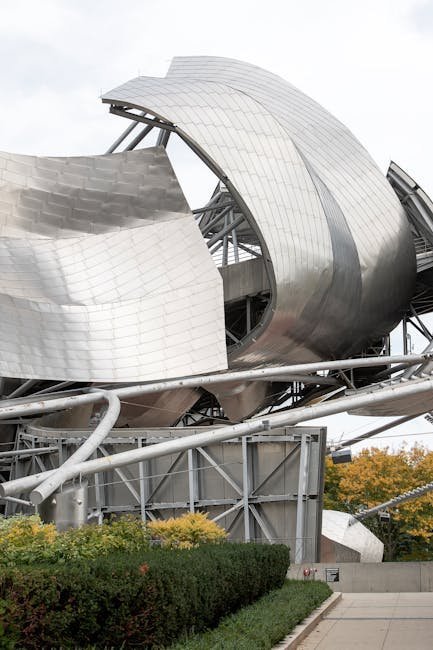
Deconstructivist buildings are characterized by fragmentation, non-rectilinear geometry, and the deliberate violation of architectural norms. Walls lean, floors slope, grids are distorted, and volumes collide. The goal is to create buildings that express the instability and complexity of contemporary experience.
The 1988 Deconstructivist Architecture exhibition at the Museum of Modern Art in New York, curated by Philip Johnson and Mark Wigley, defined the movement and introduced its key figures to a wide audience.
Frank Gehry & the Guggenheim Bilbao
Frank Gehry is the most famous Deconstructivist architect. His Guggenheim Museum Bilbao (1997) transformed a struggling industrial city into a global cultural destination and demonstrated that spectacular architecture could drive urban regeneration.
The building's titanium-clad forms, resembling a ship in flower, are organized around a central atrium that soars 50 meters. Gehry used CATIA, an aerospace design software, to realize the building's complex curved surfaces, pioneering a digital approach to architectural design.
Gehry's earlier work, including the Vitra Design Museum in Germany (1989) and the Walt Disney Concert Hall in Los Angeles (2003), established his language of fragmented, sculptural forms. His later buildings, including the Fondation Louis Vuitton in Paris (2014), show a continuing evolution of his expressive vocabulary.
Zaha Hadid & Parametric Form
Zaha Hadid (1950-2016) was the most original architect of her generation. Her early drawings, influenced by Russian Constructivism, depicted buildings as exploded fragments floating in abstract space. Her completed buildings realized these visions in concrete, steel, and glass.
The Vitra Fire Station (1993) was Hadid's first major built work, a composition of sharp, tilting concrete planes that seem to slice through space. The Rosenthal Center for Contemporary Art in Cincinnati (2003) was her first American building, an urban carpet that folds from street to wall to ceiling.
Hadid's later buildings, including the Heydar Aliyev Center in Baku (2012) and the Guangzhou Opera House (2010), used computational design to create continuous, flowing surfaces that blur the boundary between wall, floor, and roof. Her work expanded architecture's formal possibilities.
Other Key Figures
Rem Koolhaas/OMA brought a conceptual, programmatic approach to deconstructivism. The Villa dall'Ava in Paris (1991), the Bordeaux House (1998), and the Seattle Central Library (2004) are radical reorganizations of architectural program as much as form.
Daniel Libeskind's Jewish Museum Berlin (2001) uses fragmented geometry to express the rupture of the Holocaust. The building's zigzag plan, void spaces, and tilted walls create a deeply affecting spatial experience that communicates trauma and loss without literal representation.
Coop Himmelb(l)au's work, including the UFA Cinema Center in Dresden (1998) and the BMW Welt in Munich (2007), pushes deconstructivism toward expressionist extremes, with cantilevering volumes and angular glass shards that seem to defy gravity.
Criticism & Influence
Deconstructivism has been criticized as formalist, expensive, and self-indulgent. Critics argue that deconstructivist buildings prioritize photographic impact over user experience, creating spectacular exteriors with dysfunctional interiors. The Bilbao effect, where a spectacular building is used as an economic development tool, has been both praised and condemned.
The movement's relationship with digital design tools has become increasingly important. As BIM (Building Information Modeling) and parametric design have become standard, the formal language of deconstructivism has become easier to design and build.
Deconstructivism's legacy is visible in the work of many contemporary architects who use digital tools to create complex, non-standard forms. The movement's insistence that architecture can be expressive, emotional, and complex has permanently expanded the range of architectural possibility.
"Deconstructivist architecture accepts the complexity and contradiction of our world, not as a problem to be solved but as a condition to be expressed."
Deconstructivism and Digital Design Tools
The rise of deconstructivism coincided with the emergence of digital design tools that enabled architects to conceive and realize forms previously impossible to construct. Frank Gehry's use of CATIA, originally developed for aerospace engineering, transformd architectural practice. This software allowed Gehry to translate complex sculptural models directly into construction documents, bridging the gap between artistic vision and technical execution.
Parametric design, pioneered by architects like Patrik Schumacher and Zaha Hadid Architects, took digital design further. Instead of designing specific forms, architects defined parameters and relationships that generated forms algorithmically. This approach allowed for the creation of continuously varying surfaces, adaptive structures, and buildings that could respond to environmental data through their very geometry.
The computational turn in architecture has democratized complex form-making. What once required the resources of a Gehry or Hadid practice can now be achieved by smaller firms using accessible software like Rhinoceros 3D and Grasshopper. Digital fabrication technologies, including CNC milling and 3D printing, have further expanded the architect's ability to create customized, non-standard building components at reasonable cost.
Contemporary architects continue to push the boundaries of digital design. Firms like UNStudio, MVRDV, and BIG (Bjarke Ingels Group) use parametric methods to create buildings that respond to programmatic, environmental, and contextual constraints. The legacy of deconstructivism lives on not primarily in its forms but in its demonstration that architecture can embrace complexity, contradiction, and computational sophistication.
Deconstructivism and Contemporary Urbanism
Deconstructivist approaches to urban design have influenced how contemporary cities are conceived and experienced. The Parc de la Villette in Paris by Bernard Tschumi used deconstructivist principles to create an urban park without traditional hierarchies. Point grids, lines, and surfaces were superimposed to create a landscape of unexpected juxtapositions and programmatic freedom that rejected classical and modernist ordering principles.
Deconstructivism's influence on contemporary museum architecture has been particularly significant. The Jewish Museum Berlin and the Museum of Modern and Contemporary Art in Strasbourg demonstrate how fragmented geometry can create meaningful spatial experiences that engage visitors emotionally and intellectually. These buildings use deconstructivist form not as empty spectacle but as a way to represent historical complexity and cultural uncertainty.
The relationship between deconstructivism and landscape architecture has produced innovative designs where buildings appear to merge with their sites. Daniel Libeskind's Imperial War Museum North in Manchester sits on a reconstructed canal basin, its shattered globe form reflecting in the water. Zaha Hadid's MAXXI Museum in Rome bridges across a former military barracks, creating a new urban connection between the historic center and the Flaminio district.
Contemporary architects continue to draw inspiration from deconstructivist strategies while moving beyond the movement's original formal language. The emphasis on process, layering, and programmatic complexity that deconstructivism introduced has become absorbed into mainstream architectural practice. The movement's greatest legacy may be its demonstration that architecture can engage with philosophical ideas and cultural complexity without abandoning its responsibility to create compelling spaces.
Criticism and Legacy of Deconstructivism
Deconstructivism has been the subject of intense criticism since its emergence. Critics argue that the style prioritizes photographic impact over human experience, creating buildings that are more interesting as images than as places to inhabit. The expense of constructing irregular forms, the difficulty of fitting standard building systems into non-rectilinear spaces, and the frequent compromises between architectural vision and practical function have all been noted as weaknesses of the approach.
The relationship between Deconstructivism and digital design tools has become a subject of debate. Critics question whether the formal complexity enabled by computers serves architectural quality or merely indulges formal novelty. The distinction between form generated by genuine programmatic, structural, or environmental logic and form applied as a stylistic veneer has become increasingly important as digital tools make complex geometry accessible to any architect.
Despite these criticisms, Deconstructivism has permanently expanded the formal vocabulary of architecture. The movement demonstrated that buildings could be fragmented, dynamic, and ambiguous without sacrificing structural integrity or functional performance. Contemporary architects routinely use digital tools to create complex, non-standard forms that would have been inconceivable before the Deconstructivist revolution, regardless of whether they identify with the movement's philosophical foundations.
Deconstructivism and the Philosophy of Fragmentation
Deconstructivism draws intellectual sustenance from the philosophical movement of deconstruction, particularly the work of French philosopher Jacques Derrida, who argued that meaning is never stable but always in flux, and that any structure — linguistic, cultural, or architectural — contains contradictions that can be unpicked. Architects like Peter Eisenman and Bernard Tschumi engaged directly with Derrida's ideas, treating buildings as texts that could be deliberately destabilized. Eisenman's Wexner Center for the Visual Arts in Ohio deliberately fractures the building's grid, creating spaces that feel perpetually unsettled, while Tschumi's Parc de la Villette in Paris overlays three independent systems of points, lines, and surfaces that never quite align, forcing visitors to construct their own experience from the fragments.
Enduring Significance
Deconstructivism challenged the fundamental assumptions of Western architecture. While the movement has evolved into more pragmatic forms, its insistence on complexity and the destabilization of conventional form has permanently expanded the possibilities of architectural expression. Contemporary parametric and computational design approaches owe a debt to Deconstructivism.
Further Reading
Learn more about Deconstructivism on Wikipedia and explore broader Western architecture traditions.